Most people who hear the phrase “self-neglect” picture something extreme, a crisis, a news story, a safeguarding case. But self-neglect is usually quieter than that. It builds slowly. And by the time someone else notices, the person living it has been struggling for a while.
I know this because I’ve been there myself. Depression doesn’t always look like sadness. Sometimes it looks like a kitchen you can’t face, post you haven’t opened in months, and a front door you’re afraid to answer.
What self-neglect actually looks like
Self-neglect covers a wide range of situations. At its core, it means someone isn’t able to maintain their home, their health, or their daily routines in a way that keeps them safe and well.
That might look like:
- Rooms becoming unusable: clutter, unwashed dishes, or belongings piling up until spaces are hard to move through
- Hygiene slipping: not because someone doesn’t care, but because the energy or motivation isn’t there
- Bills and letters going unopened: admin paralysis, often linked to anxiety or overwhelm
- Withdrawing from contact: cancelling appointments, avoiding visitors, not answering the door
- Home maintenance falling behind: broken things staying broken, mould going unaddressed
None of this means someone is lazy or doesn’t care. It usually means they’re dealing with something that’s taken all the energy they have: depression, bereavement, ADHD, chronic illness, trauma, or simply being ground down by a system that was supposed to help.
Why it happens
Self-neglect is almost never a single-cause problem. It usually sits at the intersection of several things:
Mental health. Depression, anxiety, PTSD, ADHD: all of these can make daily tasks feel impossible. Executive function difficulties mean knowing the kitchen needs cleaning but physically not being able to start. It’s not a willpower problem. It’s a brain-chemistry problem.
Loss and grief. After a bereavement, a relationship ending, or a major life change, the home is often the first thing that slips. Grief takes all the bandwidth.
Physical health. Chronic pain, reduced mobility, fatigue conditions: when getting out of bed takes everything you’ve got, the state of the house stops being a priority.
Social isolation. When nobody is coming round, there’s less reason to keep things up. And the worse things get, the harder it is to let anyone in, which deepens the isolation.
System failure. I spent four years working in the NHS as a Lived Experience Professional, and the thing that frustrated me most was how often people fell through the gaps. Services that were supposed to help would discharge someone as “stable” while their home was in crisis. Or they’d address the mental health but never the practical reality of what depression had done to the living space.
That gap, between clinical support and practical help, is exactly where self-neglect takes root.
What doesn’t help
Judgement. Telling someone their home is a mess when they already know, and already feel ashamed, makes things worse, not better.
A one-off clearance. A team coming in, filling a skip, and photographing the empty room might look dramatic, but if nothing changes about the patterns, the situation, or the support around that person, the room fills up again. I’ve seen it happen repeatedly.
Waiting for it to become a crisis. Self-neglect often only gets attention when it reaches safeguarding-referral level. By that point, the person has been struggling for months or years. Earlier support, even something simple like someone calm coming alongside to help with the practical stuff, can prevent that escalation entirely.
What does help
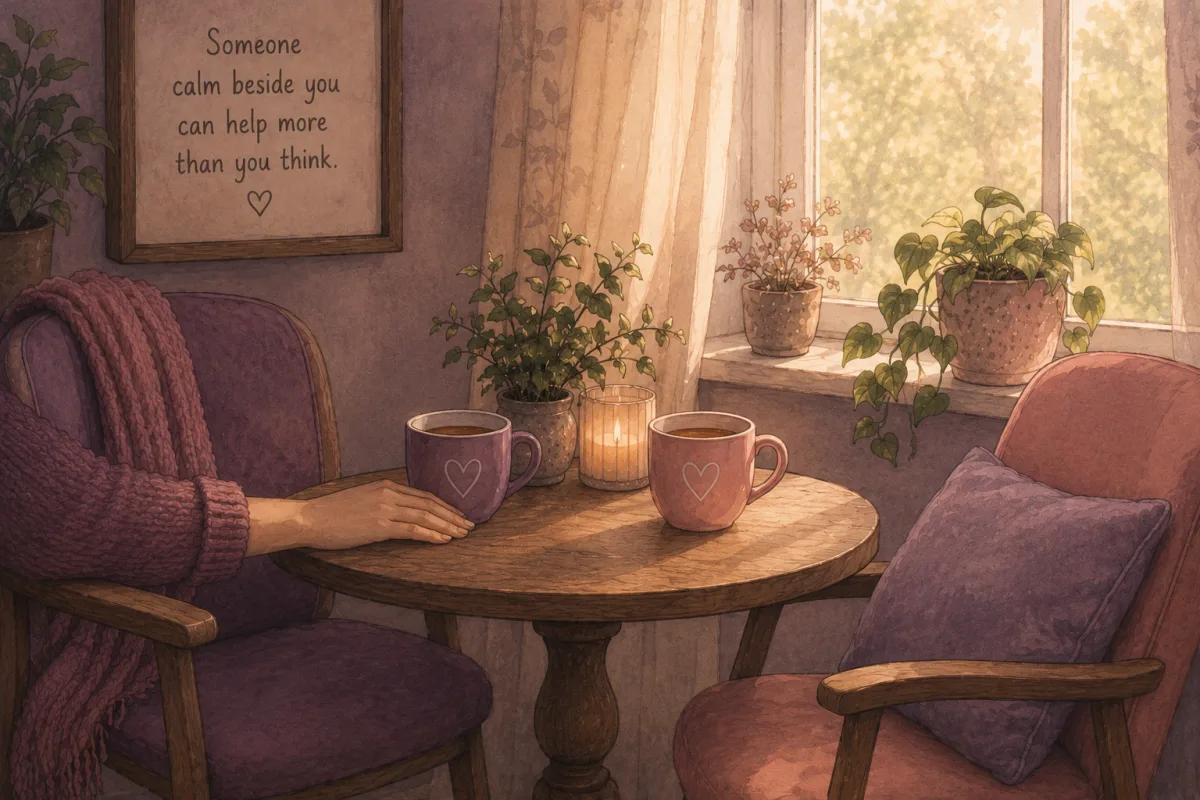
The thing that makes the difference, in my experience, is simple: someone alongside you who gets it.
Not someone with a clipboard. Not someone who’s going to judge the state of the kitchen. Someone who’s been there themselves, who understands the weight of it, and who’ll roll their sleeves up and work with you at your pace.
That’s what I do. Whether it’s a single session to tackle one overwhelming room, or ongoing fortnightly support to build habits and confidence, the work is always:
- Consensual: nothing happens that you haven’t agreed to. Nothing leaves the house without your say-so.
- At your pace: not a production schedule. Your pace, your priorities, your decisions.
- Judgement-free: I’ve lived with depression for decades. I know what it’s like when the house reflects how you’re feeling inside. There’s no shame here.
If you’re a professional reading this
If you’re a social worker, community nurse, housing officer, or support worker, and you’re looking for somewhere to refer someone who needs practical home support: not therapy, not a clearance company, but genuine, patient, hands-on help. That’s what I provide.
I’m DBS-checked, trauma-informed, and I spent four years as an NHS Lived Experience Professional before starting Healing Spaces. I cover Ealing, Hounslow, and Hammersmith in West London.
The referral process is straightforward, no forms, no hoops. Get in touch and we’ll talk about whether I’m the right fit.
If this is about you
If you’re reading this and thinking “that sounds like me”, you’re not alone, and it doesn’t have to stay this way.
The first consultation is always free. No commitment, no pressure. Just a chance to see if having someone alongside you makes a difference.
It usually does.