
Working together
How to get the most out of working with us
We know from the inside what it's like when a home needs some TLC, and we love seeing every hour count. Some of what makes an hour count happens on the day. Some of it is decided earlier, when the booking takes shape. That's what this guide is for. Once we start, we want it to succeed every bit as much as you do, and planning the time well together is how we give it its best chance.
The short version: covering the same hours in fewer, longer sessions tends to bring more for the money, and often costs less overall. Everything below is the why behind that, and none of it is a requirement: it's what we'd want a friend to know before deciding what to book.
Making the most of set-up and wind-down
Every session includes a little set-up and wind-down. At the start: carrying things in, protecting surfaces, getting products and tools out, and a few minutes agreeing where to begin. At the end, the same in reverse: packing away, and leaving everything safe and tidy, especially when a room is mid-sort. None of this is an extra on the bill. It's part of the hours we plan together, and it has to happen for the session to go well.
The useful thing to know is that it happens once per session, whether the session is two hours or six. In a two-hour session it takes a noticeable bite out of the middle, where the real change happens. In a five-hour session it's the same bite from a much bigger sandwich. Fewer, longer sessions mean more of our time together going on the work itself.
Why a small bathroom isn't a two-hour job
On the what to expect page we talk about working in small, manageable chunks, and that stays true. But sometimes a chunk has a natural start and end, so stopping in the middle can undo much of what the time achieved.
For example a small bathroom sounds like a small job, so a two hour session sounds like plenty. But a bathroom that hasn't had a deep clean in years is best cleaned in a rotation: products are left to soak into limescale and buildup while we move to work on something else. This reduces the need to scrub, saving significant time.
Scoping down to half the room may not help either: with nowhere else to keep busy, there's no soaking time, and elbow grease on its own works slower and finishes duller. Stopping on the dot partway means the set-up cost paid twice, a second session to book, and usually more hours in total than finishing in one go. The room ends up costing more and shining less.
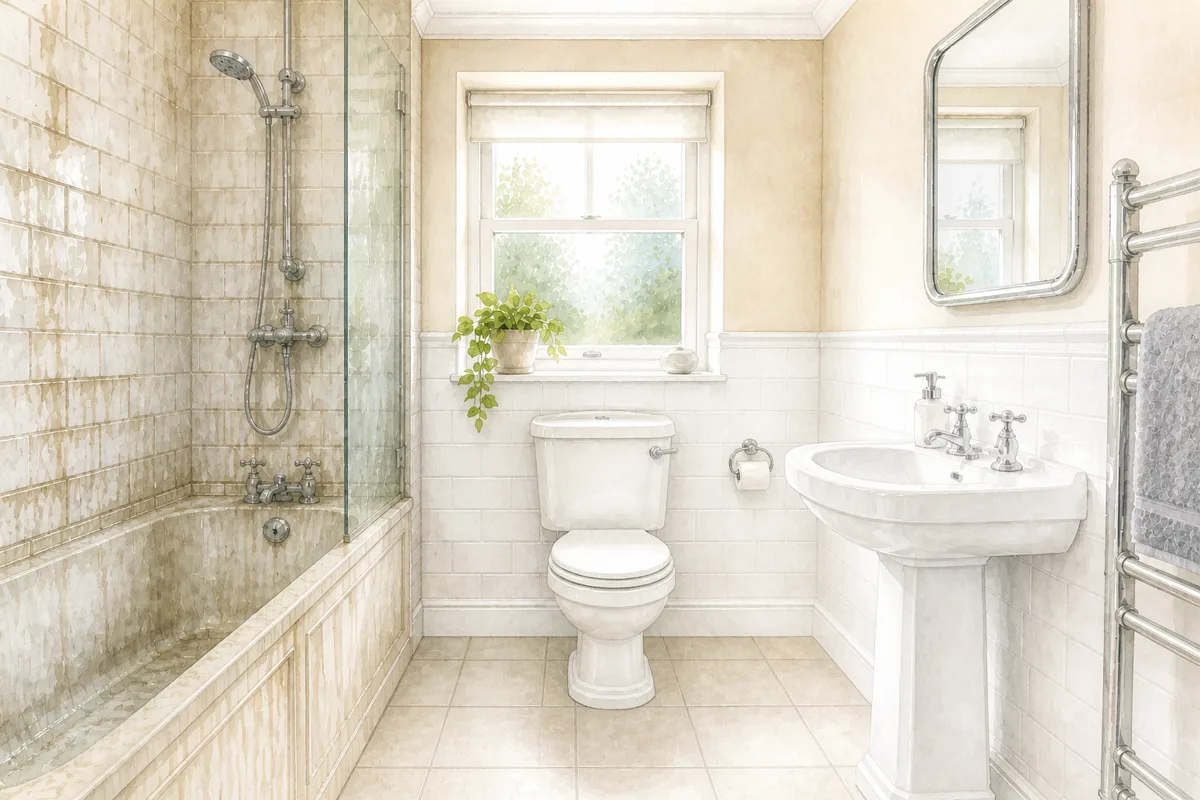
two hours, squeezed
- 1no room in the plan for products to soak while we work
- 2so it's elbow grease alone, which is slower and duller
- 3the clock ends the session partway
- 4a second session, with the set-up paid again
- 5more hours in total, and a lesser finish
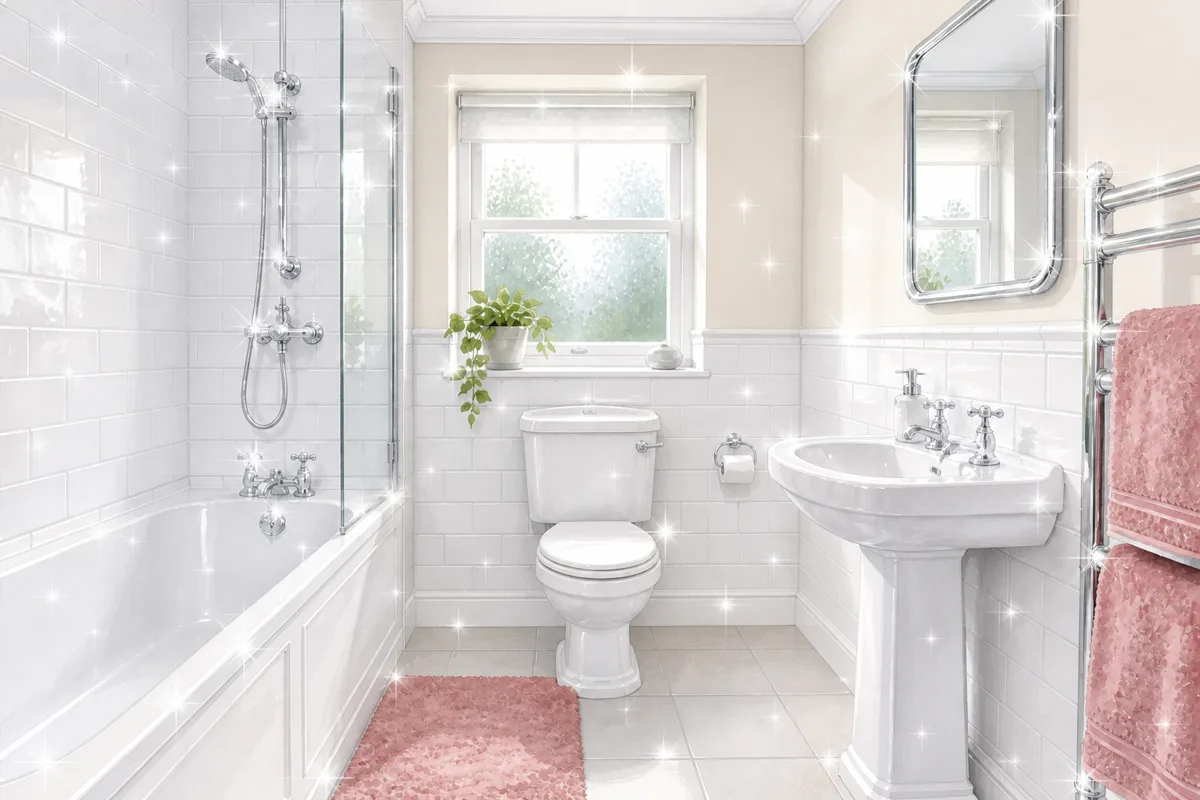
three hours, in one go
- 1products go on across the whole room
- 2they soak while hands move to the next patch
- 3each area is fast when its turn comes
- 4the room reaches a real finish in one session
- 5fewer hours in total, and a better shine
Making the most of momentum
The first stretch of any session is warm-up: reading the room, settling in together, the first easy decisions. An hour in, decisions come faster, we've found a rhythm together, and the time is working at its best. Short sessions spend a bigger share of their time in the warm-up and end before the best stretch has long to run.
More hours for less
From the third hour of every session we start to offer our discounted price, which means the longer the session, the lower our overall hourly rate works out.
And when there's a lot to do, booking two of us for a session reduces the price per hour per person even further, and makes certain work much easier and more efficient, such as moving heavier objects, some of which work better with more of us.
The numbers live on the pricing page, and the way it works stays the same whatever we plan together: priorities and time agreed up front, and you pay only for hours worked.
Building some flexibility into the booking
Whatever we plan together, we work to make the best use of the time but sometimes the most useful stopping point sits past the agreed time.
The longer the session, the more flexing we can do inside the booked time: reordering the work, letting products do their soaking while we move elsewhere, and steering towards a natural finish. The shorter the session, the less slack there is, and the higher the chance that stopping on the dot would leave things at an unhelpful point. That's when a little flexibility in the diary earns its keep.
So when a shorter session is carrying a bigger job, consider leaving some space after it in the diary. We aim not to run past the agreed time without checking with you first, and the decision stays yours on the day. If the time genuinely is fixed, tell us when we agree priorities: we'll do our best to pick chunks that fit the hours, and aim to land the session at a natural finish rather than a hard stop.
It can be more than decluttering and cleaning
For some people, the cleaning and clearing is exactly what's wanted, and that's fine. For others the same hours can carry support from someone who has lived this from the inside, systems designed around you and your home so that keeping on top of things gets easier, and learning together as we go, so that what changes has the best chance of staying changed after we've gone.
That part doesn't show up in a photo of a finished room, but it can be a large part of what the hours are for, and it's another thing that deepens over a longer session rather than a shorter one.
What we'd suggest
If you're not sure what to book, start with a conversation. The first consultation is free, and it's exactly for this: seeing the space together, agreeing priorities, and shaping sessions around your needs and what feels comfortable. Three hours or more per session tends to reach natural finishing points; a full day goes further again; and a little flexibility either side is worth more than it looks on paper.
Get in touch to talk it through, or see what to expect for how a first visit works.