the film, before it’s a film
One page, seven skills: the collage film storyboard
About three and a half minutes, for the Healing Spaces YouTube channel first; shorter cuts for the shop and socials come from it later. It’s you, making the collage you filmed on the 27th, exactly as it happened. After each moment there’s a short drawn explainer in your own voice: why that bit matters, and what it does for you. The words below are written from what you told us — and recording them is now a conversation, not a read: David asks you one question per moment, you answer in your own words, and that answer is the voice of the film. Nothing gets cut until you’ve said yes.
Two kinds of picture, never mixed inside a shot: real (your footage — hands, journal, Chiquita; your face never straight to camera) and drawn (soft watercolour, like the first film, for the explainers only; nobody draws you or the journal). The drawn ones aren’t made yet; the cream cards say what they’ll be.
New: under each moment there’s an “and here’s the science” card — a plain-words line on what’s going on in the brain and body. David reads these (the researcher half of the duo), so your lines stay yours and the science is clearly the science. Every claim has been checked against the research and softened where the evidence is early. And a rule we’ll keep on screen: the science is about these kinds of activities in general — collage, an absorbing task, kindness to yourself, a happy memory, fixing something, a deliberate smile, time with a dog — never a claim about the journal. The film says so before the first science card and again at the end.
Cold open
The page that makes you smile
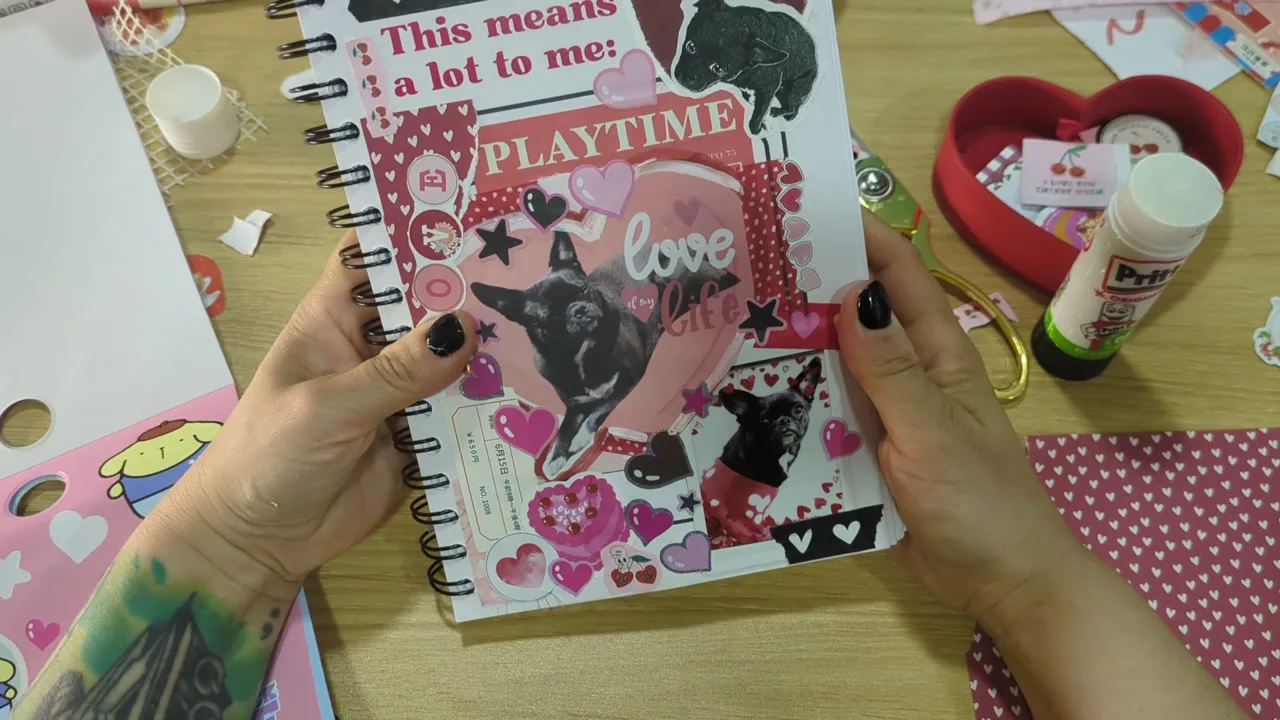
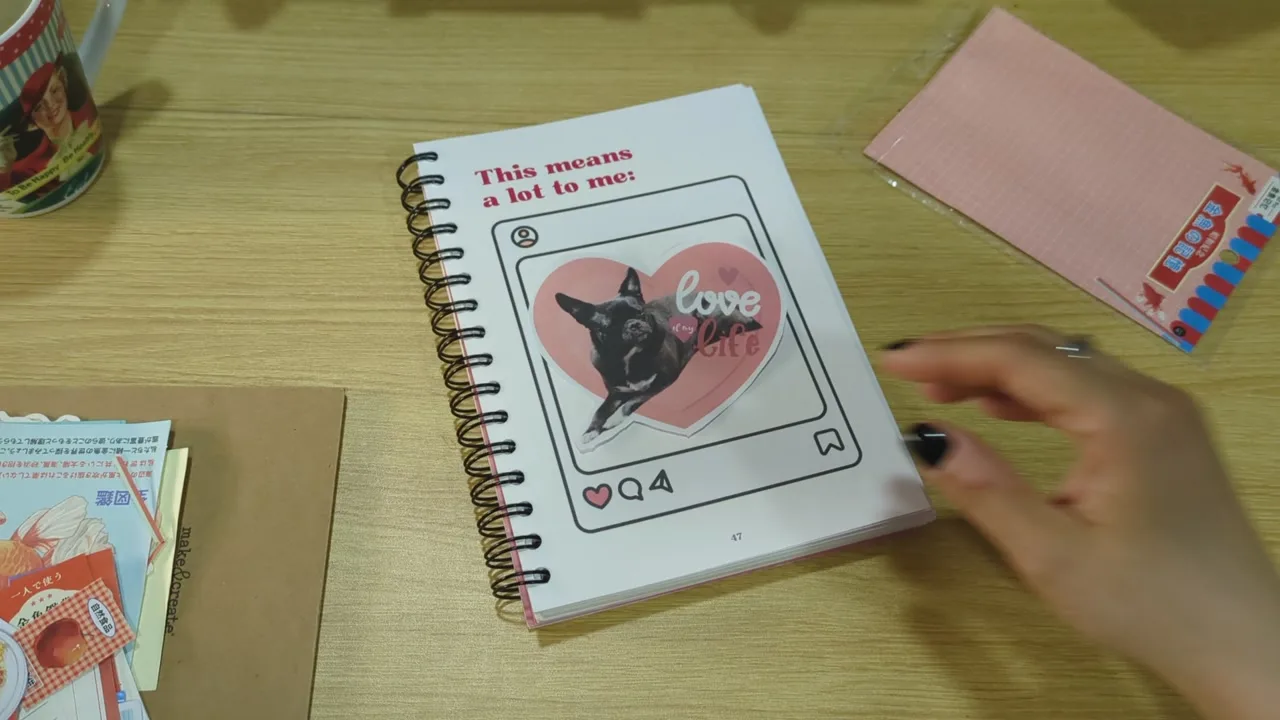
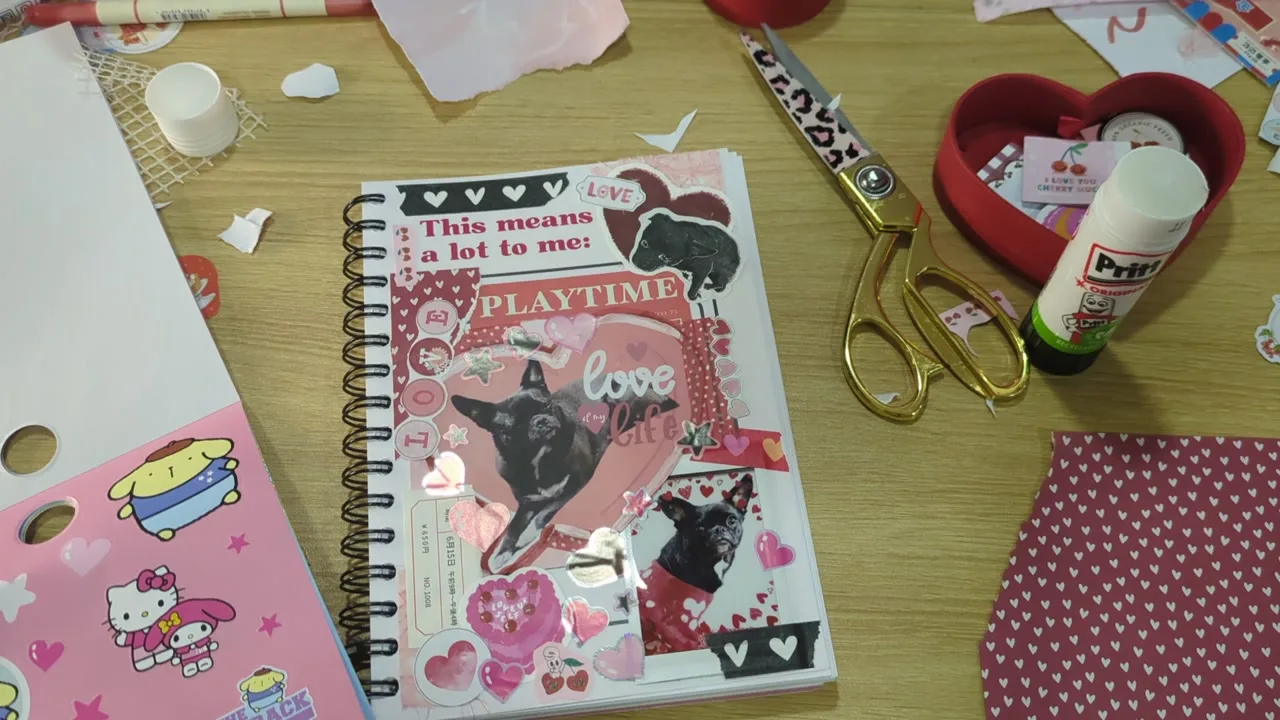
where you might land — a guide, not a script I made this page so that every time I open my journal, I smile.
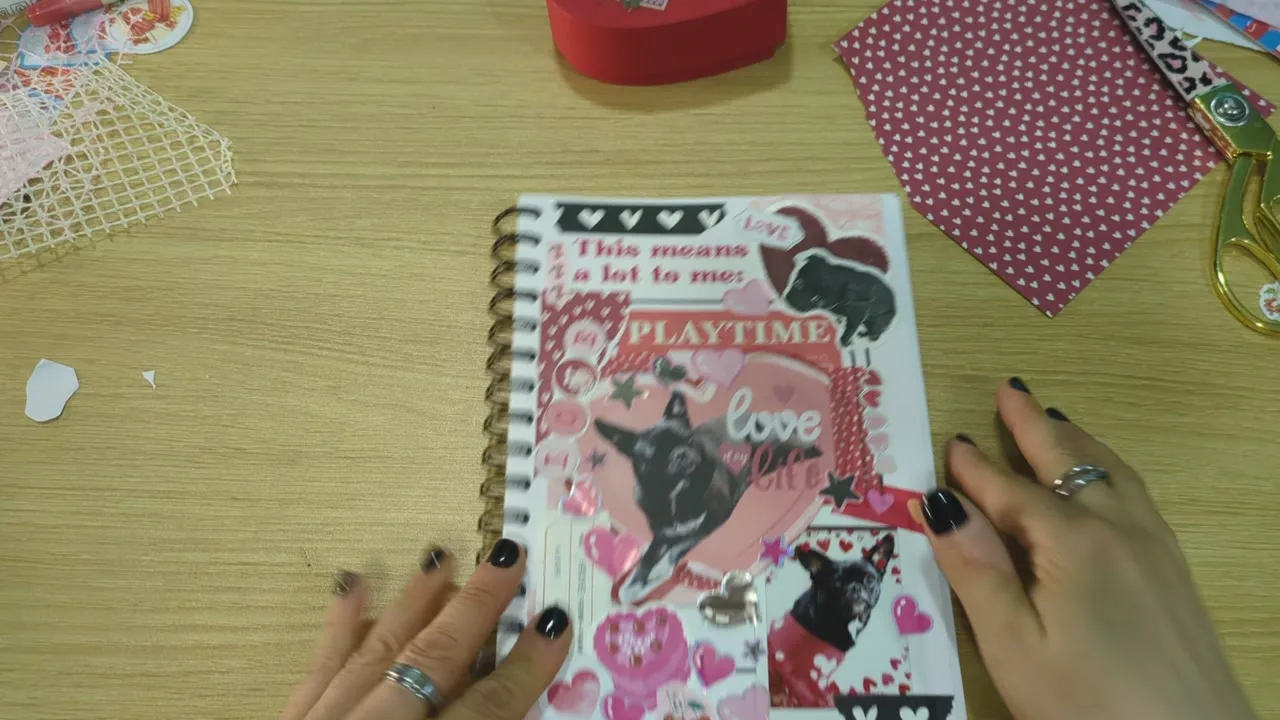
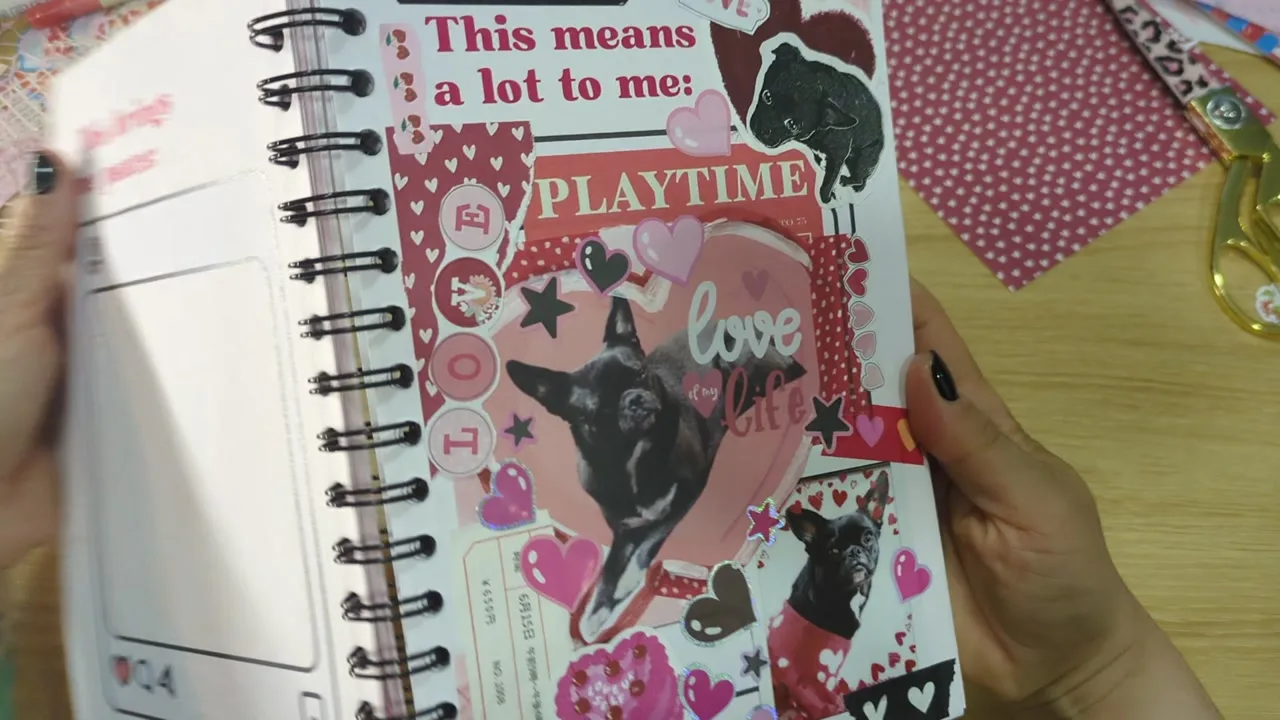
First frame, no logo: the finished page, your hand opening the book straight to it. A beat. Then the logo and the little jingle, and a line saying the drawn bits are drawn and everything with the journal in it is real.
The film · seven moments, seven skills
A blank page and a cup of tea
David asks So what are we watching — what is this evening, for you? And who are you in this film: what should people know about the person showing them this?
where you might land — a guide, not a script This is me, doing one of my favourite things: making a collage in my own journal. I’m not a therapist. I’m someone who uses these skills, and this is what they look like on an ordinary evening.
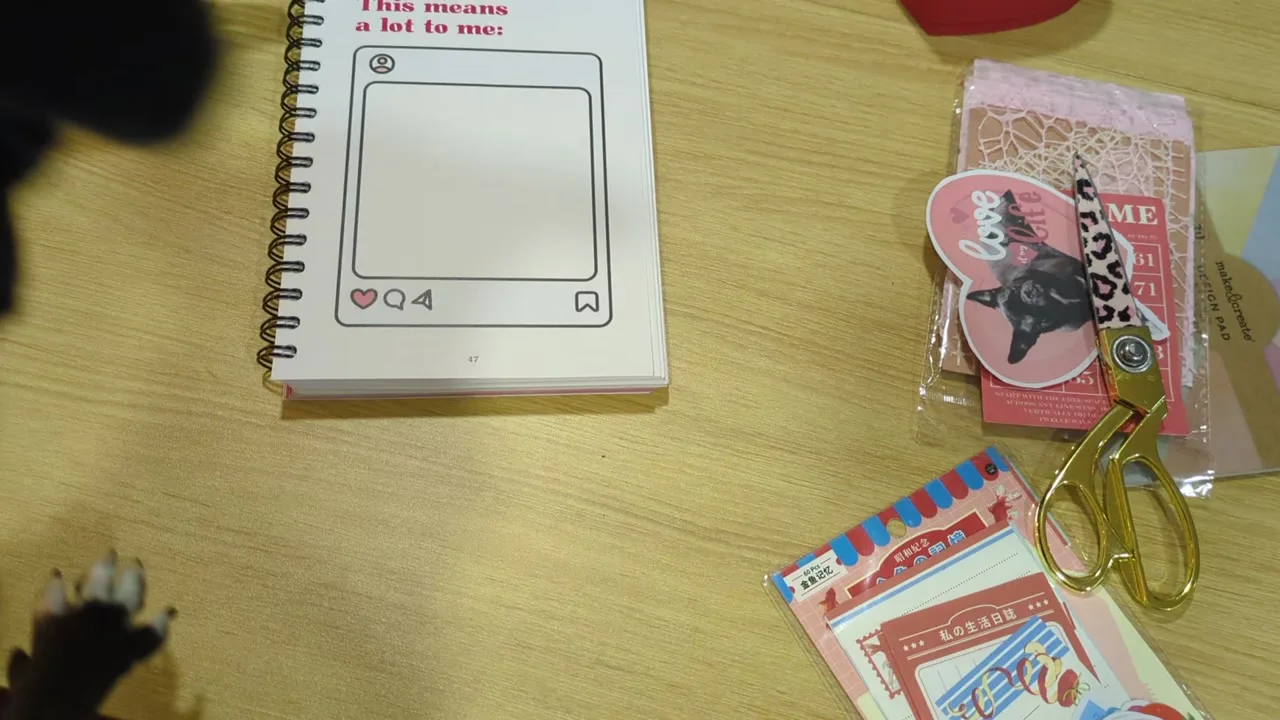
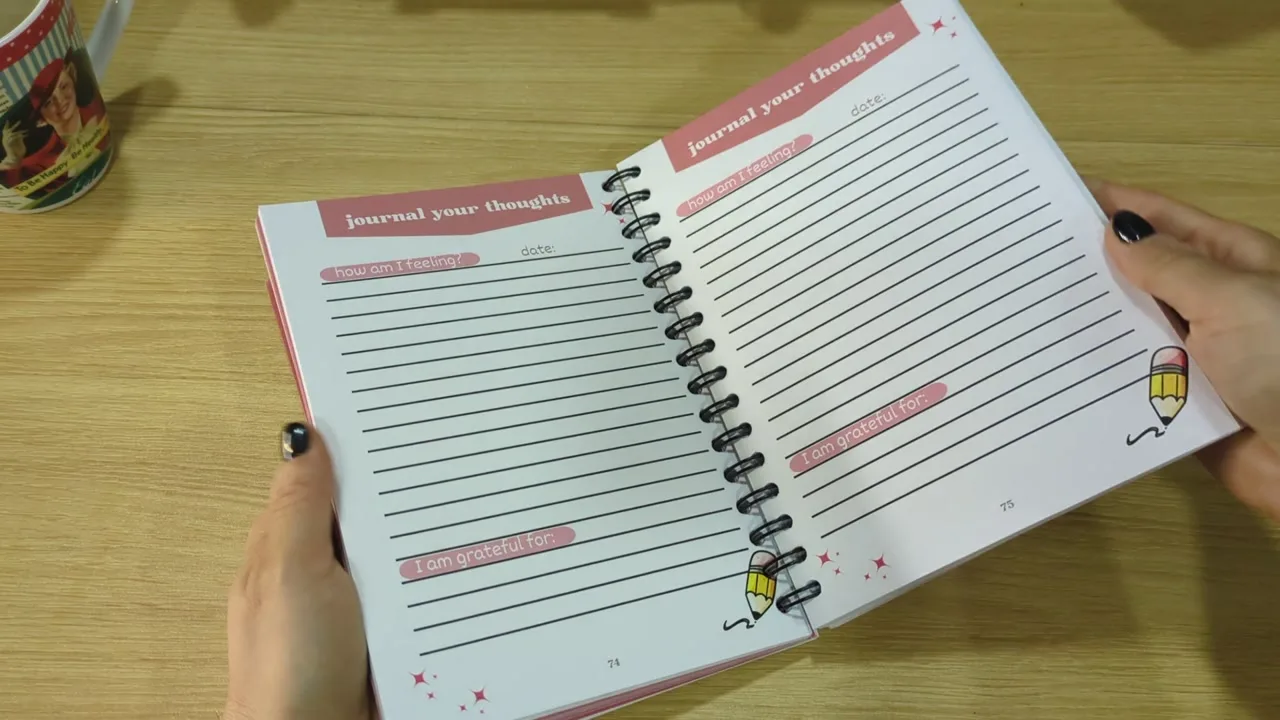
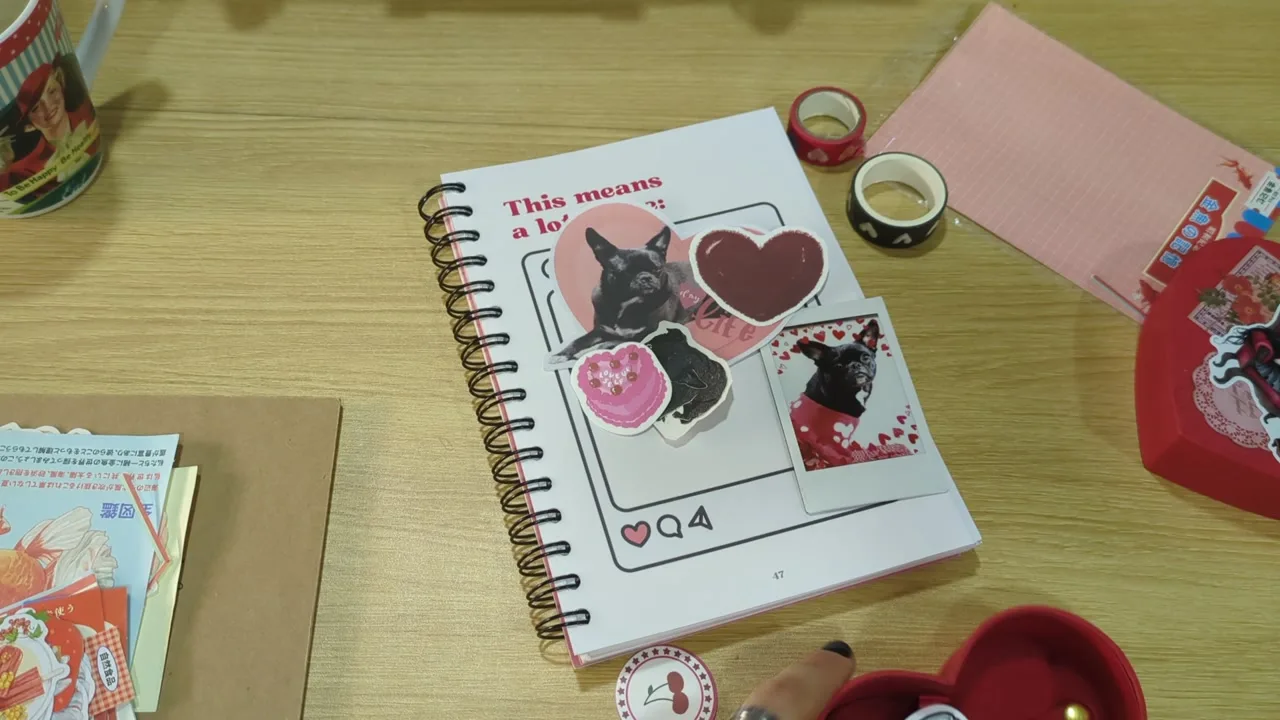
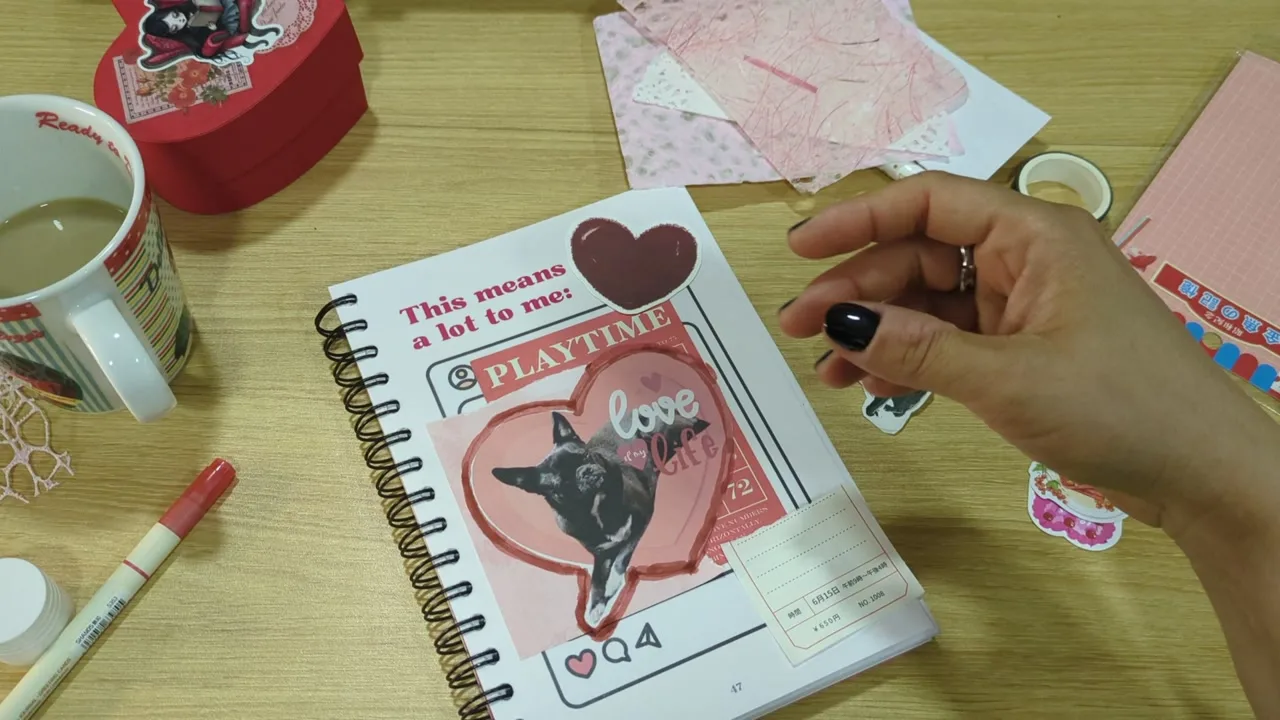
The blank “This means a lot to me” page, the materials coming out, the journal lying flat. If Chiquita wanders through, she stays in.
a kitchen table from above: a cup, a closed journal, a scatter of stickers. No person.
Where my mind goes
what it shows: giving your attention somewhere to go (DBT: Activities, from ACCEPTS)
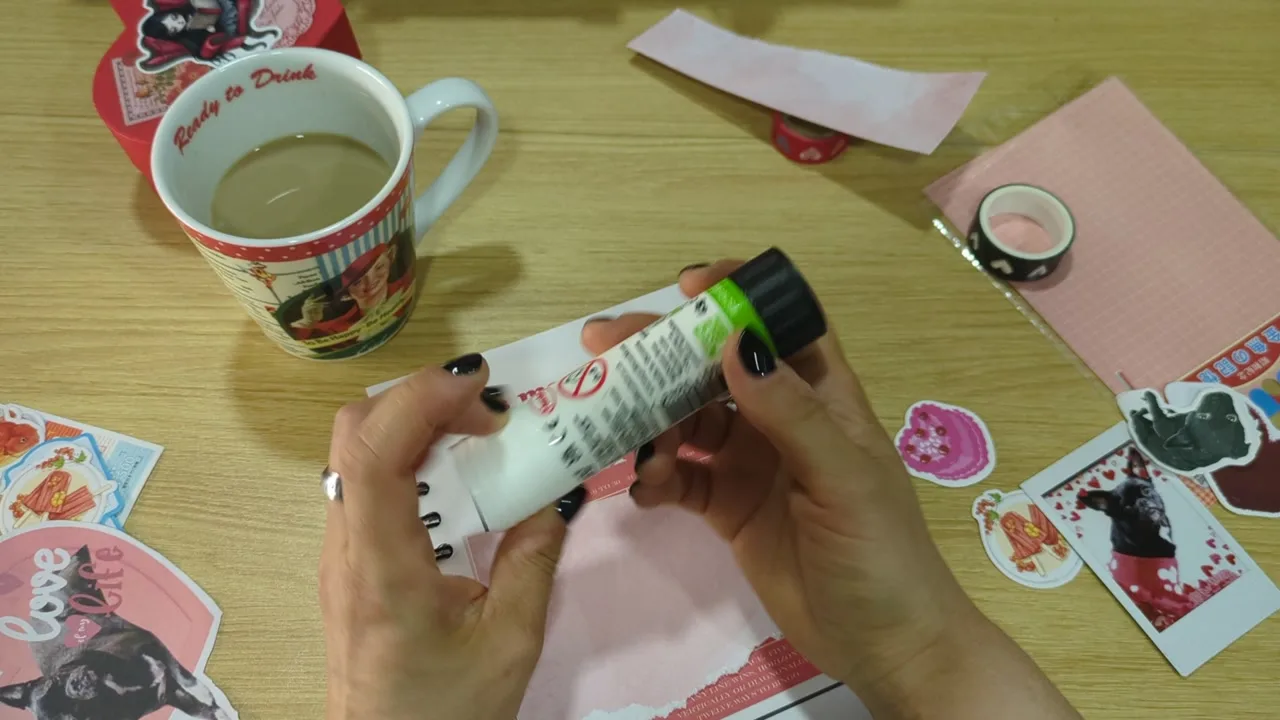
David asks While you’re gluing that polaroid down, where is your mind? Is that a skill?
where you might land — a guide, not a script While I’m doing this, my mind is only here. Not on the thing I’m worried about, not on the list. Just this page. In DBT that’s a skill — Activities, from ACCEPTS — a way to give your attention somewhere to go when it’s stuck. It’s for the hard moments, not a fix for everything.
One held shot, no cuts: gluing the polaroid down. Hands only. The stillness is the point. Before the first science card, one line on screen: “The science bits are about these kinds of activities in general — not about this journal. We’re sharing what we read, not making claims.”
and here’s the science David’s voice · every line checked against the research
Worry runs on the brain’s “background” network — the one that chatters when nothing else is happening. When your hands and eyes are busy, that network tends to quieten and a task-focused one takes over. That’s why an absorbing activity eases the chatter — for a while.
a tangle of thought-lines above a silhouette, drifting down onto a page and settling into a shape.
Stickers. Obviously stickers.
what it shows: self-soothing with the senses (DBT: Self-soothe) — and it has to be fun
David asks Why stickers? What do they do for you — and what’s fun got to do with it?
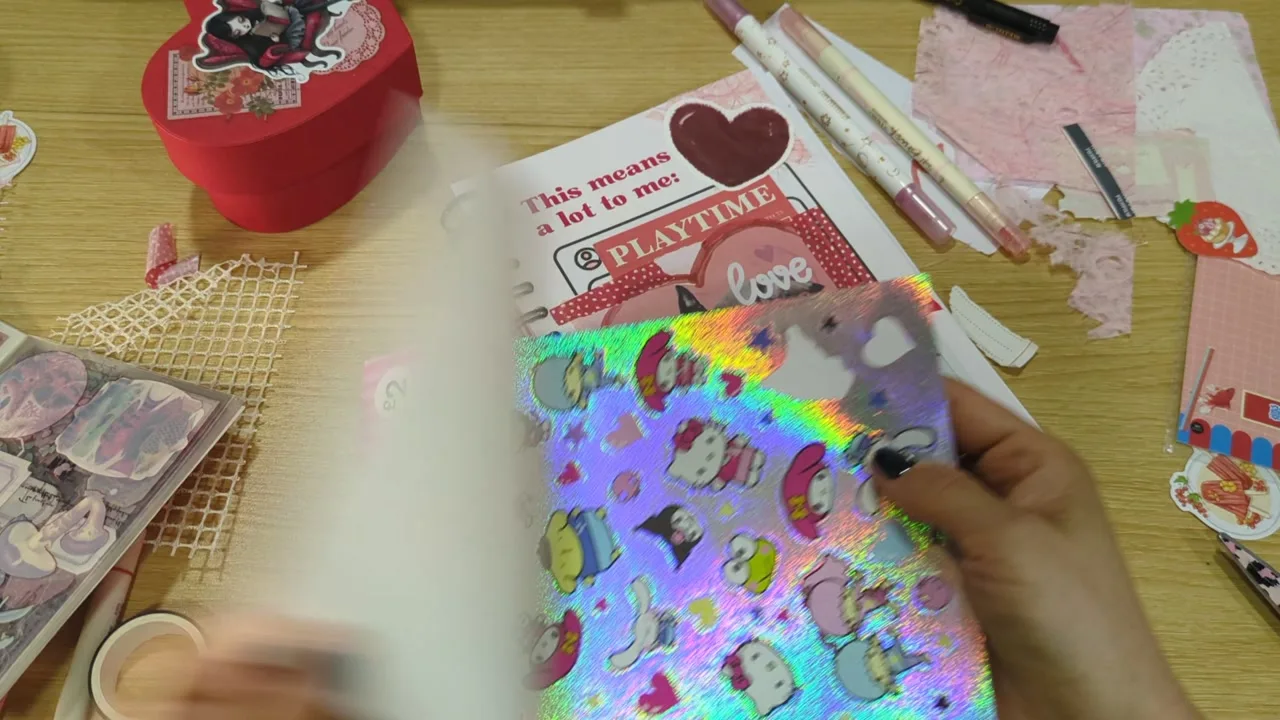
where you might land — a guide, not a script Stickers. I loved them when I was little and I still do. That’s the point — it has to be fun, or you won’t come back to it. This is the self-soothing bit: colour, paper, something nice under your fingers. It’s on the front of the journal for a reason.
The longest moment in the film, on purpose. Sticker sheets fanned out, choosing, peeling, placing. The hearts, the “love”. Your laugh if the sound has one.
and here’s the science David’s voice · every line checked against the research
A memory you loved as a child still carries its feeling with it. Deliberately choosing a happy one — stickers, say — reliably lifts mood and makes people feel more connected, in dozens of experiments. In Paul Gilbert’s terms, that’s inviting the “soothing system” in.
the five senses as five small painted objects on cream — an eye, an ear, a nose, a mouth, a hand on paper with a sticker sheet.
No rules
what it shows: not judging yourself (DBT: the non-judgemental stance)
David asks Does the page have to be pretty? What would you say to someone scared of ruining it?
where you might land — a guide, not a script It doesn’t have to be pretty. It’s not a bullet-journal video where every page is perfect and you feel like you’d ruin it. There are no rules. A crooked sticker is fine. Glue on your finger is fine.
The wonky bits, kept in deliberately: a sticker going on crooked, glue on a finger, pressing something down with the back of the scissors.
and here’s the science David’s voice · every line checked against the research
Being harsh with yourself keeps the brain’s error-checking and threat systems busy, and a body on alert can’t settle. Speaking kindly to yourself uses different circuits — the soothing ones. Perfectionism sits firmly on the alarm side; “no rules” is a step towards calm.
two pages side by side — one immaculate and untouched, one busy and loved. The loved one warms in colour; the perfect one stays pale.
I didn’t like that bit
what it shows: doing what works instead of giving up (DBT: willingness)
David asks There was a bit you didn’t like. What did you do about it?
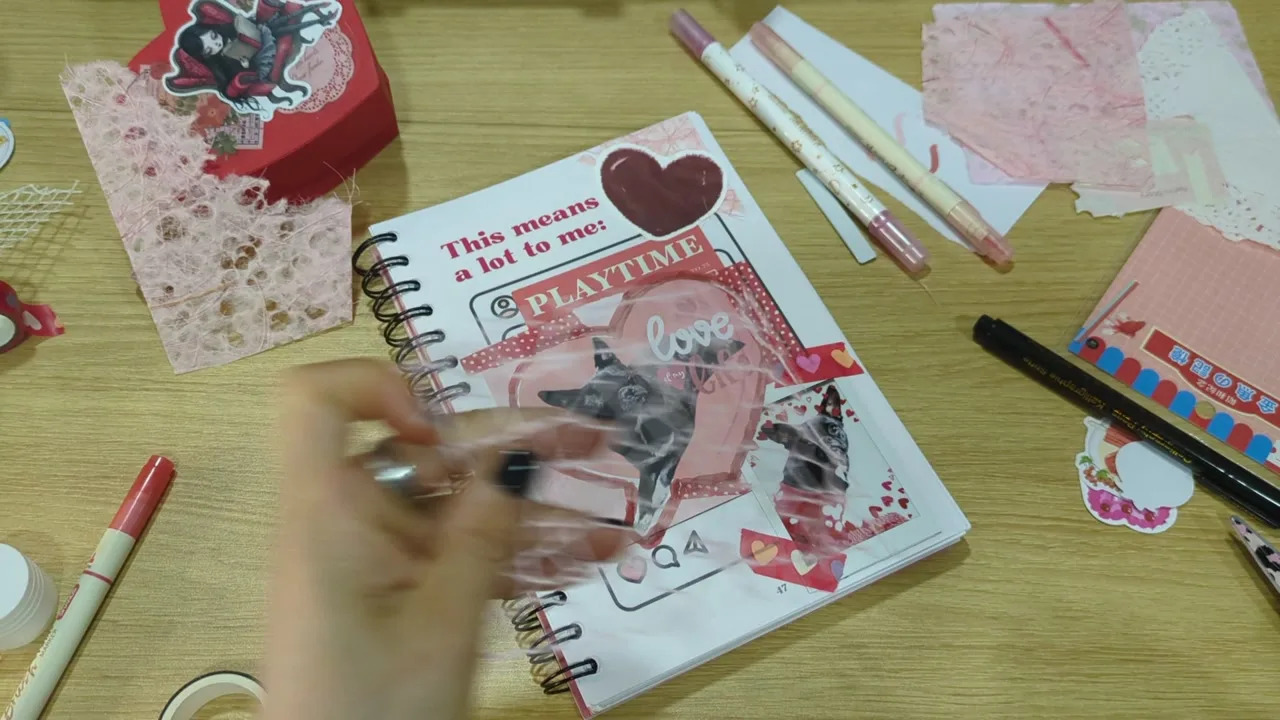
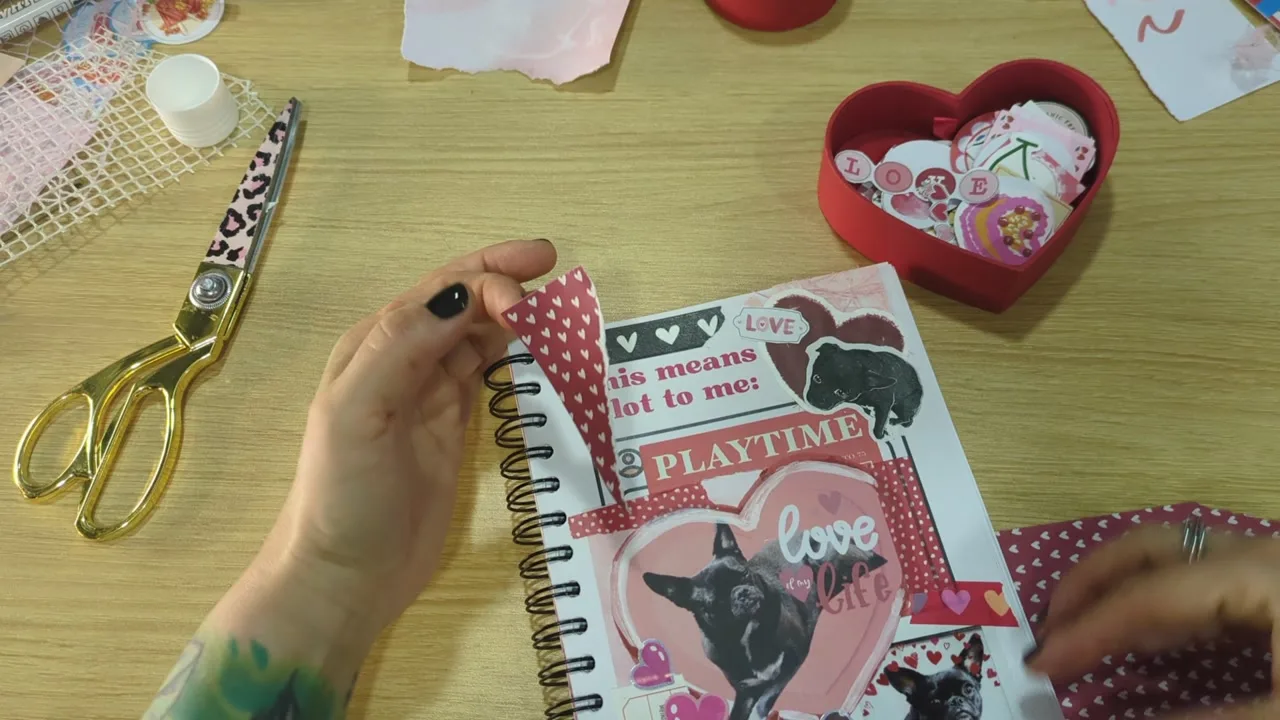
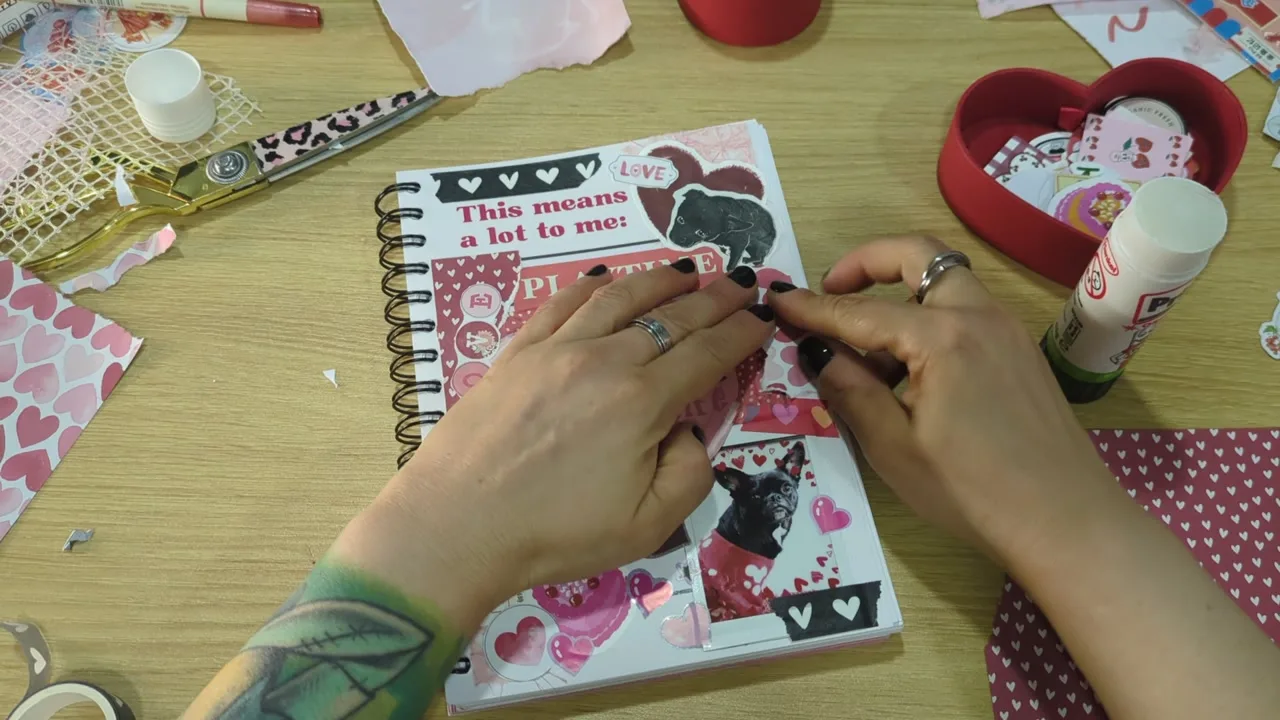
where you might land — a guide, not a script There was a part I didn’t like how it looked. So I fixed it — I put more stickers on. In the end I covered the whole page, and that’s okay. You can always fix a page. Next time I’ll keep the polaroid and decorate around it. Doing what works instead of giving up is a skill too — DBT calls it willingness.
The fix, start to finish: the bit you didn’t like, covered; then the pink paper over the whole page.
and here’s the science David’s voice · every line checked against the research
When you repair something rather than give up, you’ve just proved to yourself that you had some control. In animal studies, sensing control is exactly what switches off the giving-up response that sits close to low mood. That’s the idea behind small, doable repairs.
a page with a patch of pink paper laid over one corner, a hand pressing it flat.
Chiquita’s page
what it shows: a smile on purpose (DBT: half-smile and willing hands)
David asks Tell me about this page. Why Chiquita first? And the smile — is that a skill too?
where you might land — a guide, not a script Now this page is Chiquita, my lovely dog. Every time I open the journal, it’s going to make me smile. And a smile is a skill as well — the half-smile, with open hands. You do it on purpose, even a small one, and you practise it until it’s habit. Short term, it’s a coping skill. That’s all I’m claiming. It works for me.
The finished page in full. The book closed. Opened straight to the page. Your smile, side-on, never to camera. This is the opening shot again, now with its meaning.
and here’s the science David’s voice · every line checked against the research
Does a smile change how you feel? A little, when you do it on purpose — the biggest test yet, nearly 4,000 people in 19 countries, found a small but real lift. And time with a dog you love, eye to eye, has been linked to the bonding hormone oxytocin in both of you. A photo can’t do all that, but it can call up the feeling of that bond.
a faint half-smile drawn in three lines and two open, palms-up hands, on cream.
Close
One page
David asks So that’s one page. What did tonight give you?
where you might land — a guide, not a script That’s one page. Seven things I actually use, and I had a lovely evening doing it.
Five quick cuts from the moments above, ending on the page. Then the last card: the journal cover, “Self-Soothing Journal — built around the DBT five-senses skill”, the site address, the longer jingle. And the last words on screen: “Nothing here is medical advice, and none of it is a claim about the journal. If you’re struggling, please talk to someone — Samaritans 116 123.”
Everything we still need from you, in one place
- Chiquita — we think this one’s answered. On the 30th you said, unprompted: “my Chiquita page… every time I open it I smile” and “that’s why I put Chiquita first”. So she’s in, unless you say otherwise.
- “I’m not a therapist” — say it your way. The script has “I’m not a therapist. I’m someone who uses these skills.” But on the 30th you said “I am also a professional… I worked in mental health… it’s not just me talking.” Both are true; the film opens with whichever you’d actually say. (Question 1 of the interview is for exactly this.)
- The wonky bits. A crooked sticker, glue on a finger — moment 4 keeps them in on purpose. Happy with that? It’s your page.
- The words. Read the “where you might land” lines above — anything there you wouldn’t say? They’re only a guide now, but they steer the edit.
- The recording — about 15 minutes, no camera. Phone on the table,
David asks these seven questions (they also sit under their moments above), you answer
however it comes. Say anything again if you want; nothing is used until you’ve heard
the cut. David records his seven science lines first.
- So what are we watching — what is this evening, for you? And who are you in this film: what should people know about the person showing them this?
- While you’re gluing that polaroid down, where is your mind? Is that a skill?
- Why stickers? What do they do for you — and what’s fun got to do with it?
- Does the page have to be pretty? What would you say to someone scared of ruining it?
- There was a bit you didn’t like. What did you do about it?
- Tell me about this page. Why Chiquita first? And the smile — is that a skill too?
- So that’s one page. What did tonight give you?
- Two decisions for later (no need tonight): the gratitude page — you said “I didn’t do the gratitude page”, so does gratitude wait for a second film / another evening’s page? And the rip-a-page moment you described (write it, rip it, shred it) — worth filming another evening?