The short, honest answer to “does clutter affect mental health”: research links a home that feels stressful and cluttered with more stress and lower mood. The home-and-mood study is small. The studies show a link, not proof that clutter is the cause. They cannot prove which one causes the other. Here is what the research actually found, and what tends to help.
← Back to blog
Does clutter affect your mental health? What the research really shows
researchwellbeingmental health
The research so far
| What was tested | How much research | What it found |
|---|---|---|
| A home that feels stressful, and daily stress hormone patterns | Early studies | ?A link was found, in one small study; size not clear yet |
| Everyday hassles, and psychological symptoms | Early studies | ?Everyday hassles predicted symptoms better than major life events; size not clear yet |
| A chaotic-feeling home in the teens, and mental health at 23 | Early studies | ?Poorer mental health; size not verified |
Dots: how much research there is. Bars: how big a difference it made.
Does clutter affect mental health?
One often-cited study on this question was published in 2010 by researchers Saxbe and Repetti. They asked 60 working husbands and wives, 30 couples, to give tours of their homes. Each person described their home in their own words.
The researchers also tracked cortisol. Cortisol is a stress hormone. Its level changes across the day. The researchers looked at that daily pattern in each parent.
The women who described their homes in stressful terms had a flatter cortisol pattern across the day. Words like “cluttered” and “unfinished” were the stressful terms. A flatter pattern is linked with poorer health. That cortisol link held after allowing for how happy each spouse was in the marriage. These women’s low mood also rose over the day. The women who described their homes in restful terms showed the opposite pattern. The findings were for the women in the study.
Two things stand out. First, the study measured the words people used, not how much stuff was in the home. Second, the study was small. It shows a link, not proof that clutter causes stress. We rate this as early research: promising, but not settled.
Small hassles add up
An older strand of research helps explain why a hard home environment might weigh on people. In 1981, Kanner, Coyne, Schaefer and Lazarus followed a group of adults for ten months. The study compared everyday hassles with major life events. Life events are big changes, like a bereavement or a job loss. Hassles are the small, repeated irritations of daily life.
The researchers also measured psychological symptoms. These are signs of distress, such as low mood or worry. Everyday hassles predicted these symptoms better than major life events did.
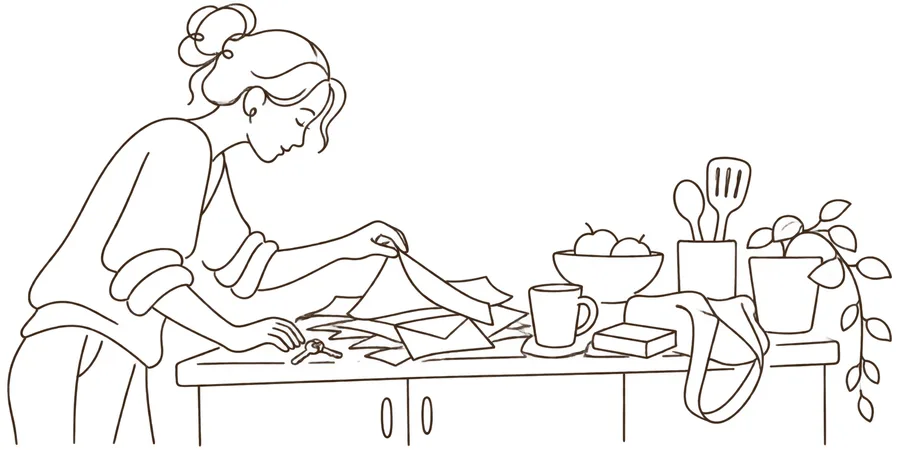
A home where nothing is where it should be can create a stream of hassles. The keys that vanish. The bill buried under a pile. The counter with no room to cook. None of these is a crisis on its own. Together, day after day, they can drain a person’s reserves for everything else. Kanner did not study homes, so the link to clutter is our reading. But that is the shape we would expect: not one dramatic moment, but slow accumulation.
Growing up with chaos
What about children? A UK twin study published in 2024 by von Stumm and colleagues followed 4,732 families. A twin study compares twins who grow up in the same home. Because twins share a home, the researchers could compare how chaotic each twin felt the same home to be. Teenagers who felt their home was more chaotic than their twin did at age 16 had poorer mental health at 23.
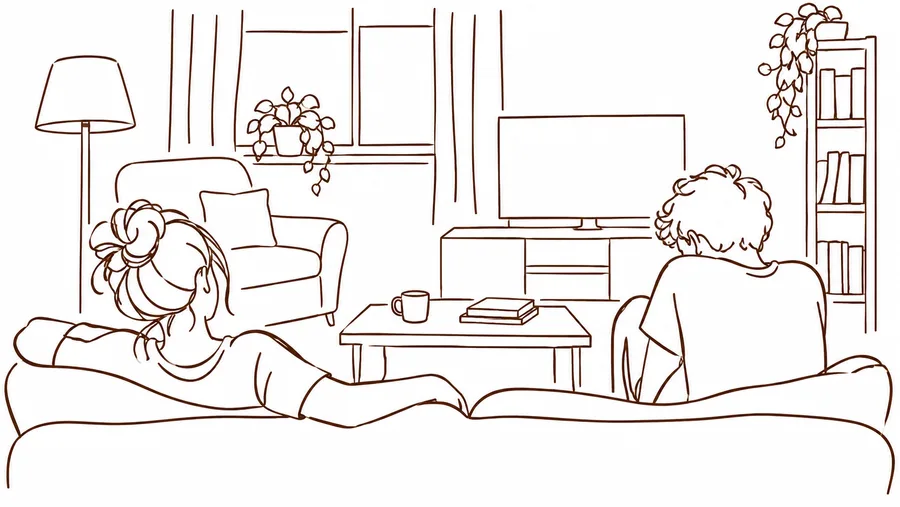
It was how chaotic the teenager felt the home was that went with poorer mental health later. This held over and above what their parents reported about the home. For parents reading this who worry about their home, that finding carries a gentler message than it might first appear.
Which comes first?
Here is the part most articles skip. The direction can run both ways. When life is hard, through grief, exhaustion or low mood, everyday jobs are often the first to go. Energy goes to getting through the day.
A US national survey of older people living at home found the same kind of link. Those with more cluttered homes reported more low mood and worry. It was a snapshot in time, so it cannot say which came first.
That is a sign, not a failing. In our experience, mess can follow low mood as much as come before it. If the mess came after a hard stretch, then treating yourself as the problem is aiming at the wrong target. The situation is tangled. Tangles get untangled gently, one thread at a time.
This is also why we are wary of confident statistics online. One claim says 65 per cent of people lose sleep to clutter. We can find no research behind that figure. The honest position: small studies show a link. That is worth taking seriously, without inflating it.
What tends to help
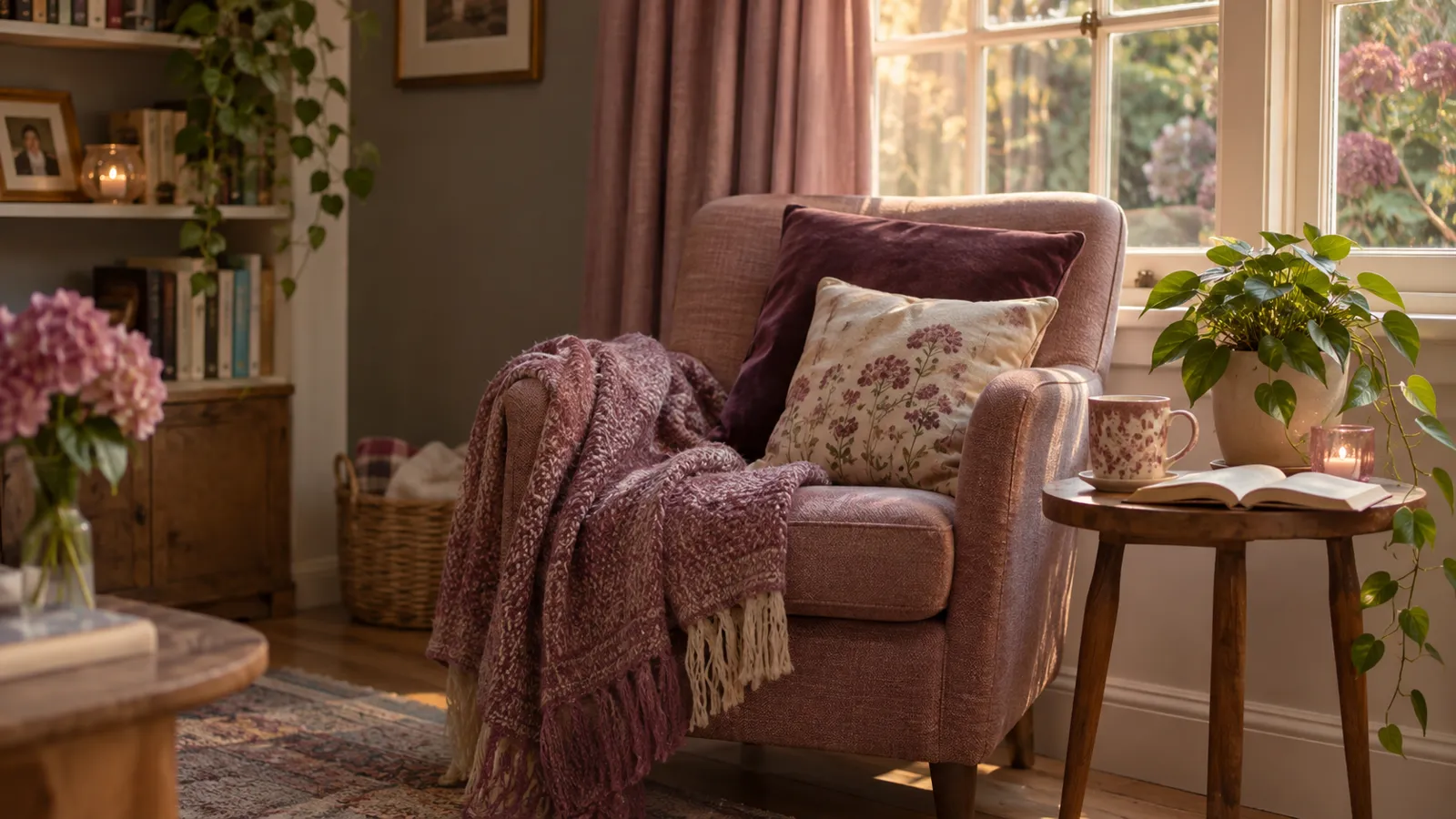
The research points to one useful idea. In that one small study, the women whose homes sounded restful had healthier daily cortisol patterns. Their low mood also eased over the day. The study did not test changing anyone’s home, so this next part is our reading. You may not need a whole house transformed. A single corner that stays clear, a chair you can sit in, a surface that is yours, can start to change how a room feels.
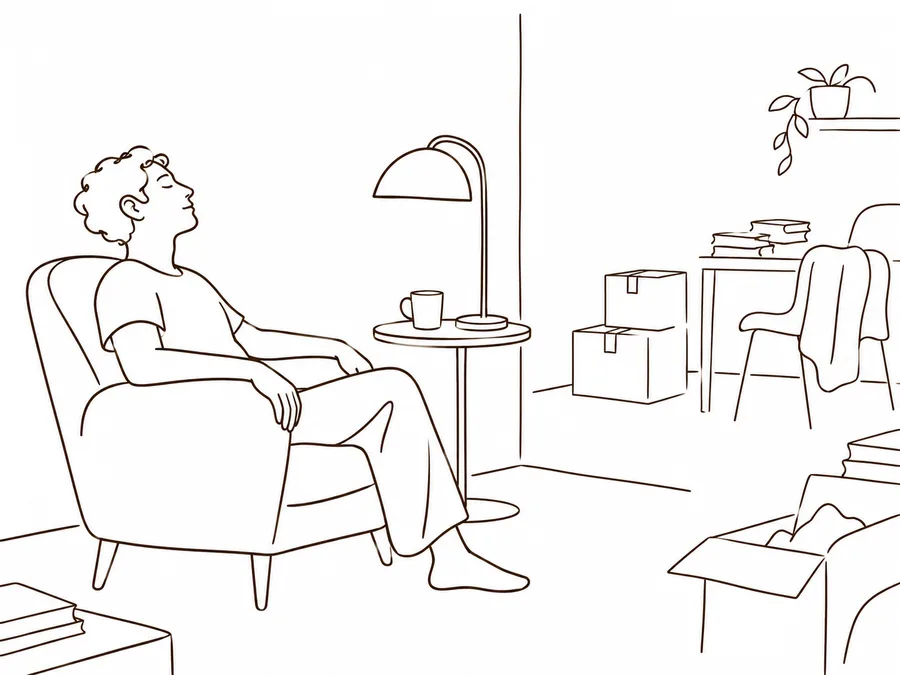
Some things that tend to help:
- Start with one small spot, not the whole house. Finishing something small builds momentum. A grand plan does not.
- Choose the spot that matters to you. Your kitchen table might matter more than your hallway.
- Aim for restful rather than perfect. Perfect is a project. Restful is a feeling you can reach.
- Lower the bar on hard days. Keeping one surface clear on a bad week is a real achievement.
Support can also make a difference. Some people find that working alongside someone turns an overwhelming job into a manageable one. That is the way Karina Barboza (Kari) works here at Healing Spaces. You can read more about that on the rest of the site.
If you are struggling with your mood
We are not clinicians, and decluttering is not a treatment. If your mood has been low for a while, the right first step is to talk to your GP, or to refer yourself to NHS Talking Therapies, which you can do directly in England without seeing a doctor first. If you need to talk to someone right away, Samaritans are there free, any time, day or night, on 116 123.
If the home side is what you’d like help with, book a free first chat.
Sources
- Saxbe, D. E., and Repetti, R. L. (2010). “No Place Like Home: Home Tours Correlate With Daily Patterns of Mood and Cortisol.” DOI: 10.1177/0146167209352864
- Kanner, A. D., Coyne, J. C., Schaefer, C., and Lazarus, R. S. (1981). “Comparison of Two Modes of Stress Measurement: Daily Hassles and Uplifts Versus Major Life Events.” DOI: 10.1007/BF00844845
- von Stumm, S., et al. (2024). UK twin study of home chaos and later mental health. DOI: 10.1177/09567976241242105
- Cheung, E., and Liu, J. (2021). “Residential Environment, Depressive Symptoms, and Anxiety Symptoms Among Community-Living Older Adults.” Conference abstract. DOI: 10.1093/geroni/igab046.2370
Related
Want to talk?
If anything here resonated, I'd love to hear from you. The first consultation is free.