Self-Soothing Journal (A5, wire-bound, lies flat)
based on personal lived experience
An A5 anxiety journal made by Kari from the hand-made journals she has used for years on her own anxious and low days. Small calming skills up front, space to pour everything out at the back, and it lies flat, printed to order in the UK.
Pictures are for illustration. Page order and small details in the printed journal can differ from what is shown.
This journal was made by lived experience. Its design is inspired by the hand-crafted personal journals Kari has been making and using for years to help her cope with her own emotions, anxiety and depression. That is why this one is so close to her heart: in a way, she has been working on it for years.
- 140 pages
- A5, fits in a bag
- Wire binding, lies flat
- Thick paper, no bleed-through
- Undated
- Printed in the UK for you
- QR code to the free Worry Tree app
What is inside
- Seven coping skills up front, in plain words: 5-4-3-2-1 grounding, 4-7-8 mindful breathing, distraction techniques for different feelings, the calming cat, the Worry Tree, the emotions wheel and your ultimate coping playlist
- 30 reflection worksheets for after you have used a skill
- 12 creative pages: collage, scribble, glue in the photos you love
- 6 mindful colouring pages for the days when words will not come
- 75 journaling pages, with prompts for when the blank page feels like too much
- An emergency contacts page at the front, and Kari's own notes on how she uses each section
- A QR code at the back to the free Worry Tree app and more free tools
- A5, wire-bound so it lies flat, thick pages that take ink without bleeding, printed in the UK
£18.99
+ £3.95 UK postage for one copy (the printer's own charge, passed on at cost): £22.94 in all, confirmed before you pay.
- Usually with you within two weeks
- 14 days to change your mind
Secure checkout by Stripe. If you change your mind, return postage is yours to cover. Shop terms.
No reviews yet: it went on sale in September 2026. The first ones go here as they come in.
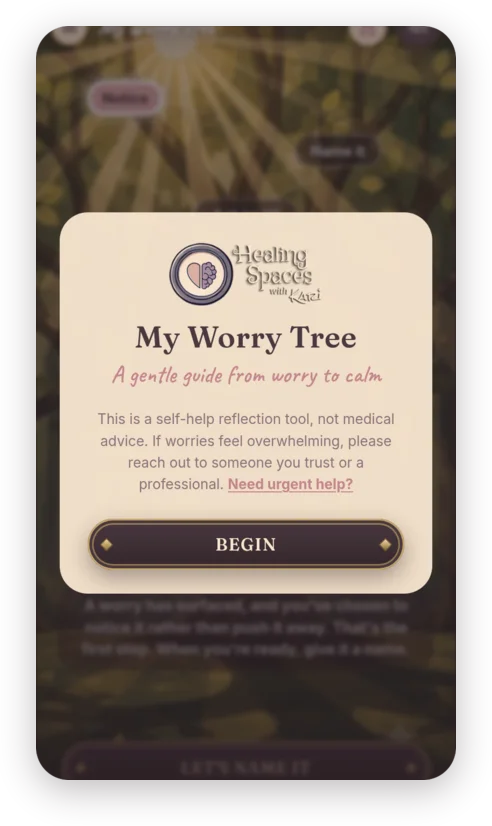 My Worry Tree, freeWhere the QR code at the back leads: the journal's signature page on your phone. Private, offline, no sign-up.
 If today feels heavier than a few pages can hold, please talk to someone: Samaritans 116 123 (free, any time), text SHOUT to 85258, Mind 0300 123 3393.
About this journal for anxiety
A write-in anxiety journal for the days when your head feels too full. The first pages teach small, practical calming skills; the rest is space to pour things out, with gentle prompts for when the blank page feels like too much.
The skills are ones Kari uses in her own work and personal life. They come from DBT and similar approaches, written in plain words the way Kari uses them herself. A few examples: the 5-4-3-2-1 grounding technique, mindful breathing, the emotions wheel, the Worry Tree for sorting what you can change from what you cannot, reflection worksheets you can come back to, and colouring pages for the days when words will not come. There is more inside than this list.
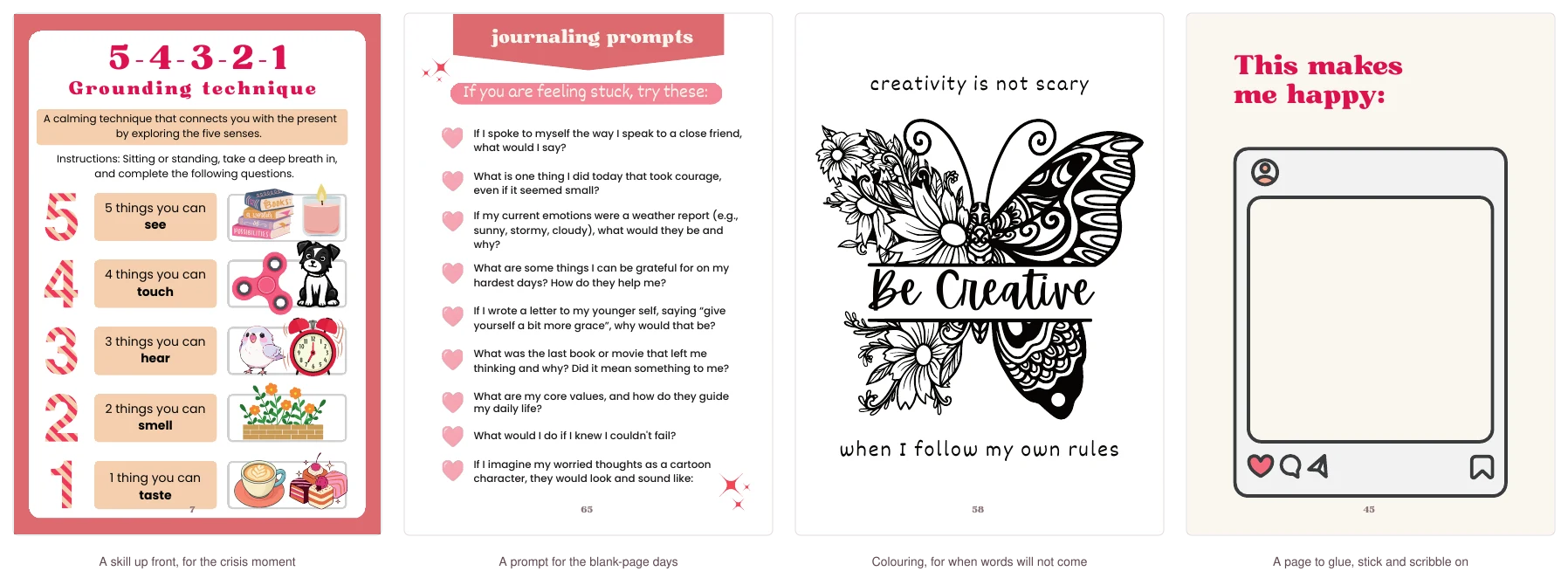
Kari has heard every reason for not journaling: "I bought this journal but I didn't use it because I don't want to ruin it." "I'm not creative like you." "I don't know how to draw." And the fear of the blank page, "that's the main one." So she designed a journal where those reasons stop being reasons. "You can't ruin this one, because that's the idea." The pages are thick enough to take paint, glue, a coffee stain, or words written "really hard, with anger". If a page has to go, tear it out and the rest stays put. If you don't like how something looks, "you can always glue another page on top." Prompts wait on the blank-page days, because even Kari gets blocked. The skills are printed up front because, in her words, "I'm in crisis, I don't remember."
None of it has to be pretty, and nothing here claims to fix anything. Kari still has anxious days. She made this one "so that every time I open my journal, I smile." And she gets the last word: "You don't have to be artistic. You don't have to be creative. In fact, I don't know how to draw. You can do a messy collage. It's fine. It's a representation of where you are at the moment."
And it does not end at the last page: a little QR code at the back leads to more free tools from us, including the free Worry Tree app, the journal's signature page as a quiet place on your phone. Private, works offline, no sign-up. Paper at home, pocket when you are out.
Each copy is printed for you when you order, here in the UK, not pulled from a warehouse shelf. That takes a little longer: allow up to two weeks for it to reach you, though it is usually quicker.
This journal is educational self-help, not therapy or medical advice.
See the difference
What makes this one different, shown rather than told.
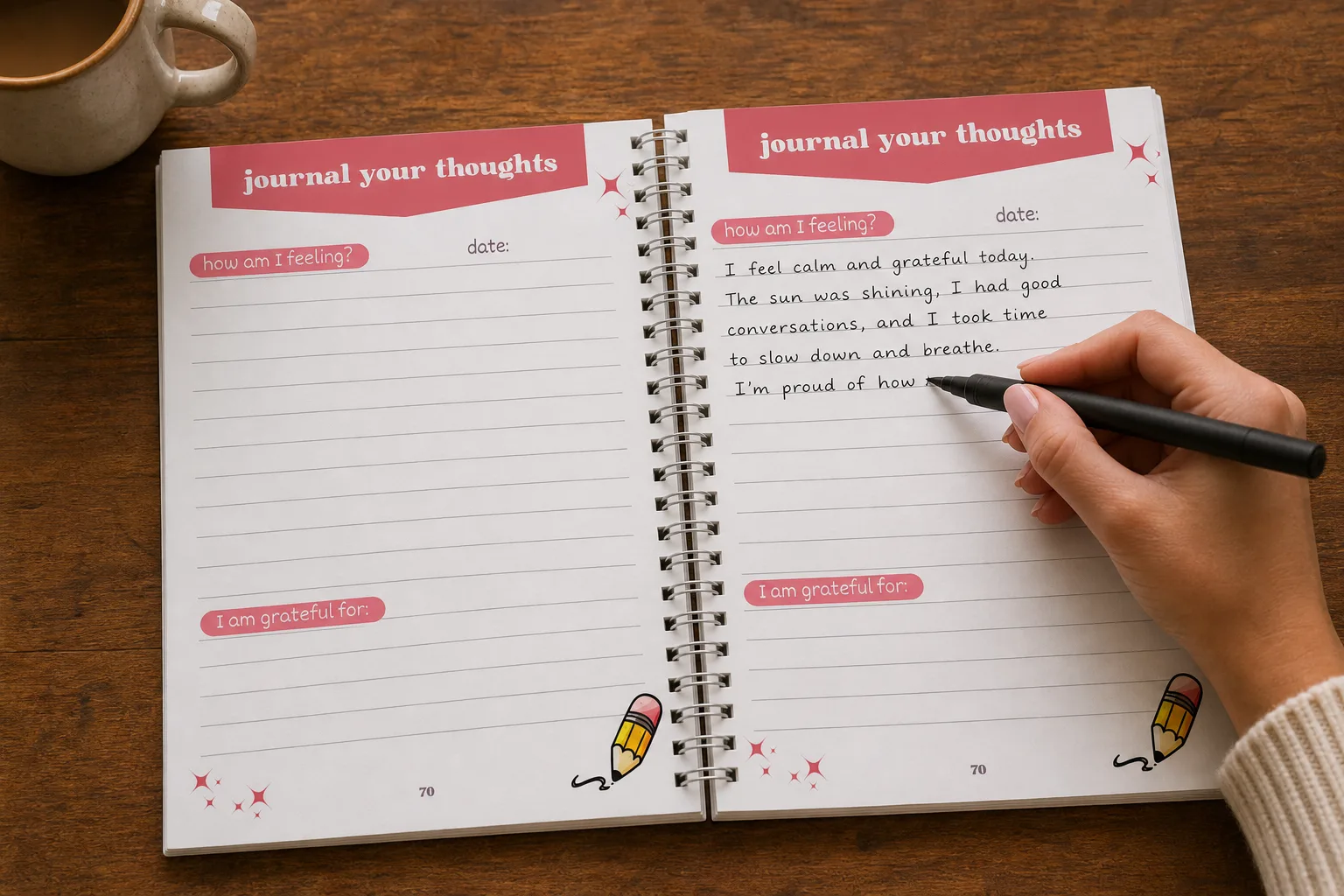
It opens flat
The twin-loop wire binding (the print trade calls it Wire-O) means both pages sit level, so writing near the middle is as easy as writing at the edge.


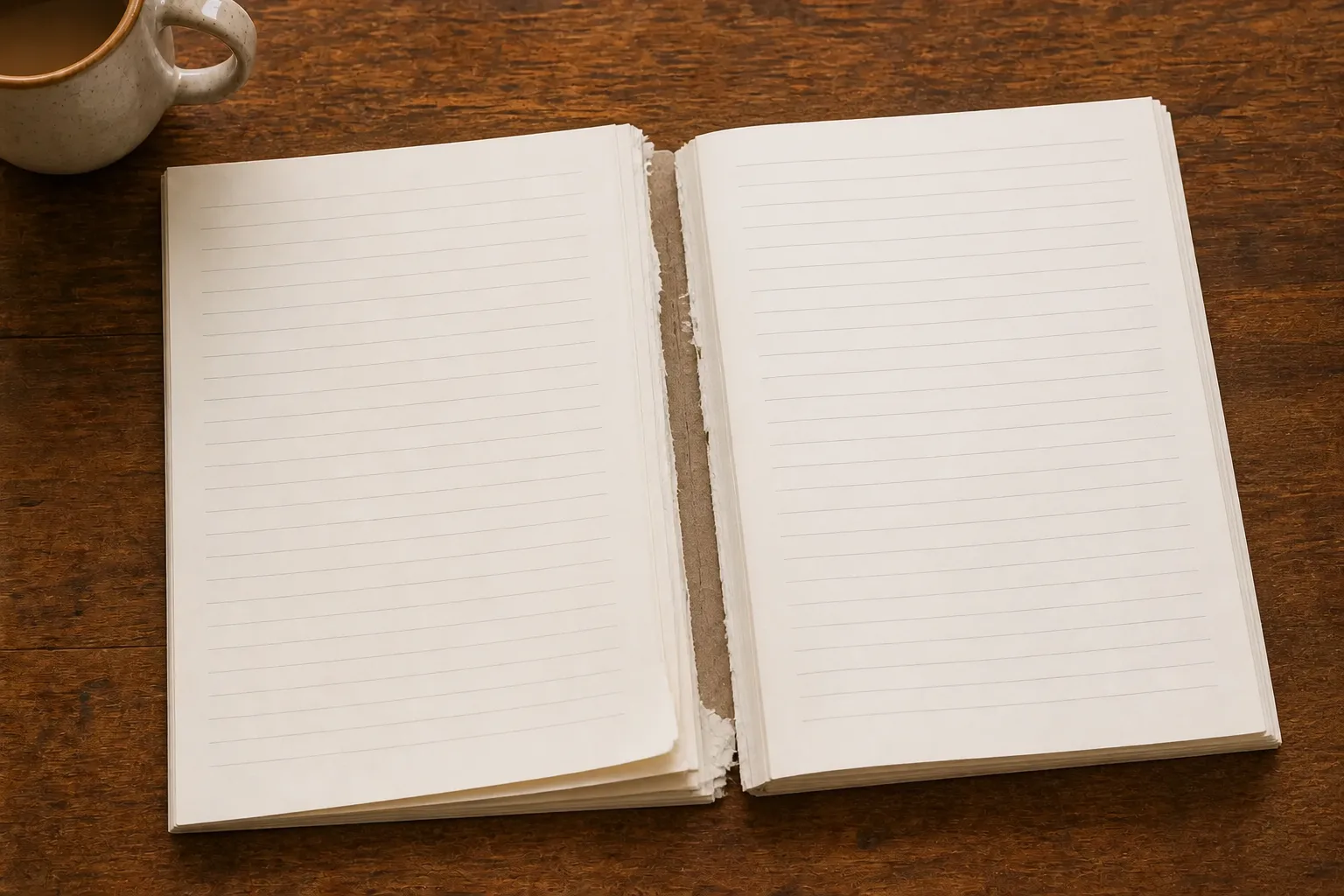
Imperfect on purpose
Kari designed the pages to feel lived in, more scrapbook than showroom: stickers, colour and layouts that are not lined up too neatly, so there is no perfect page to spoil. Scribbles, crossings-out and wonky letters fit right in.
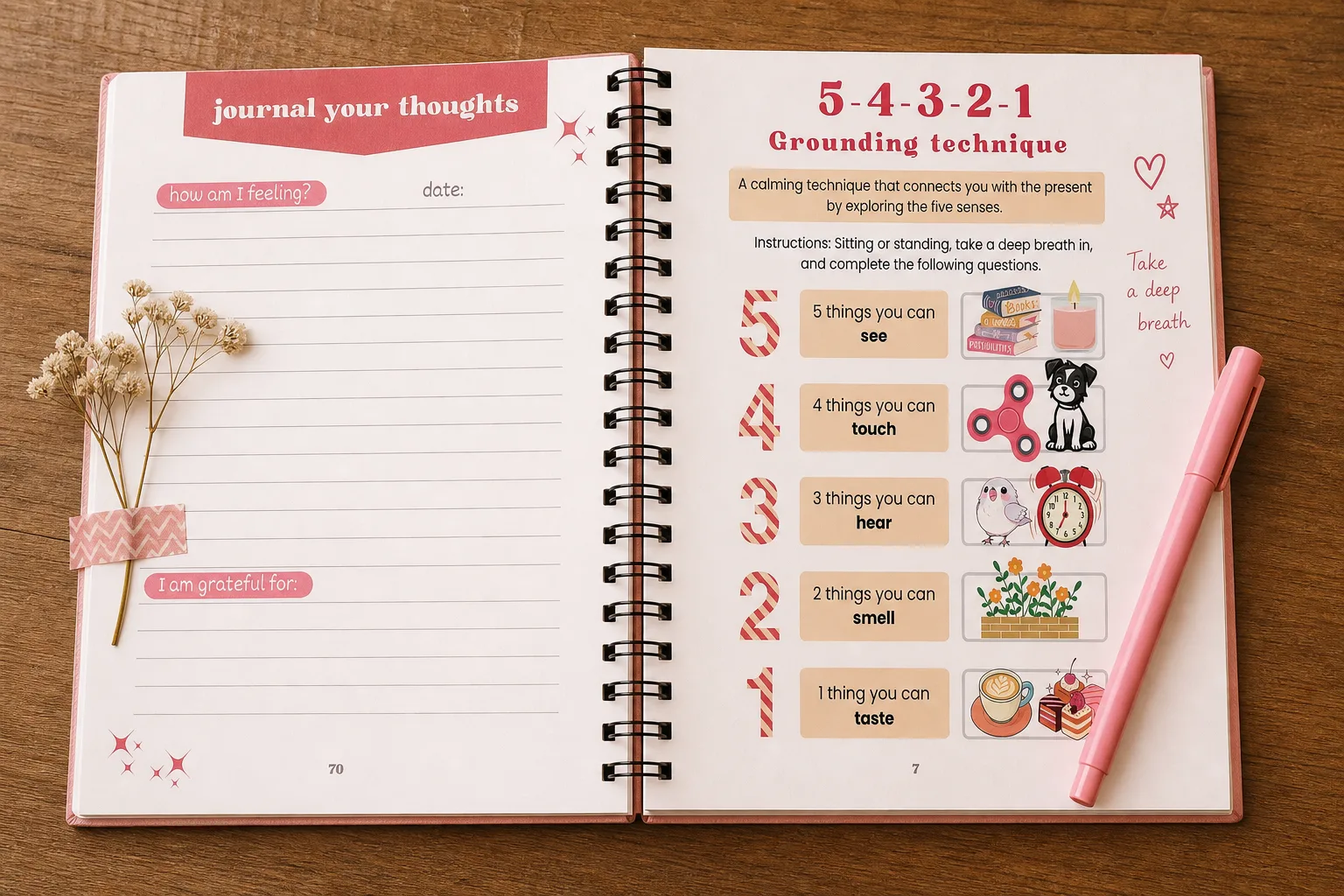
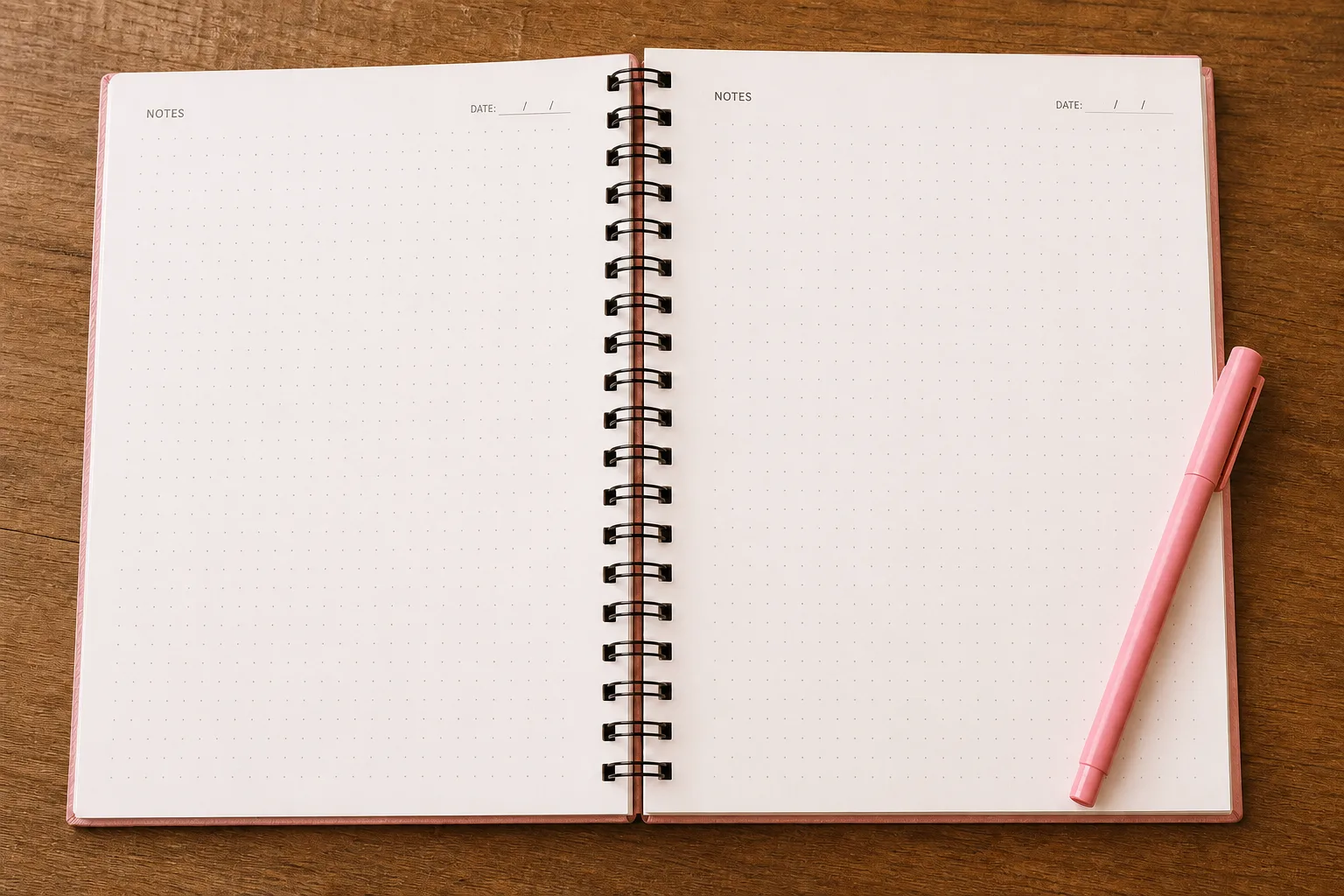
Thick pages that take ink
Felt tips, gel pens, glue and paint all get used on hard days. The paper is chosen to take them without the ink ghosting through.
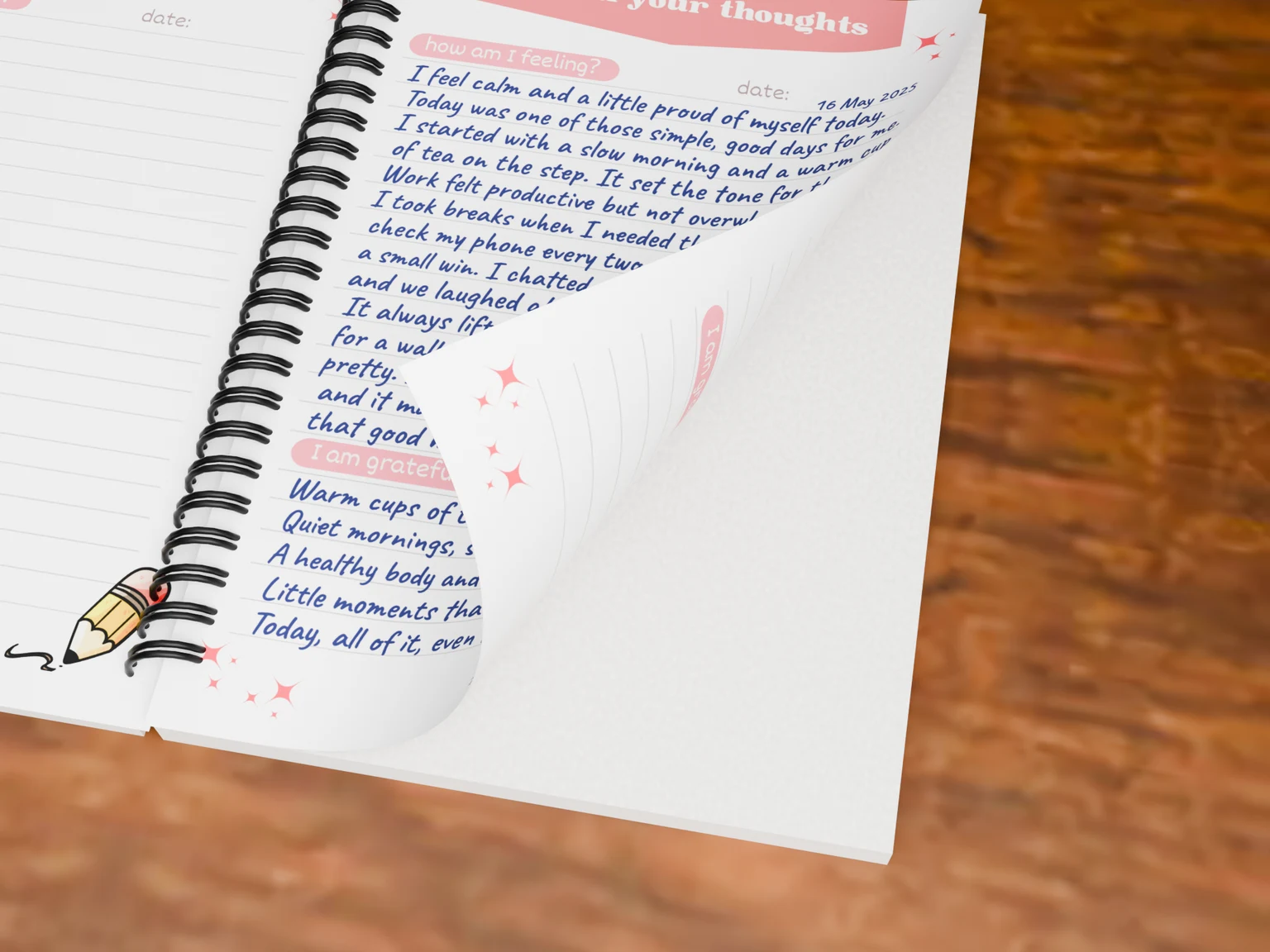
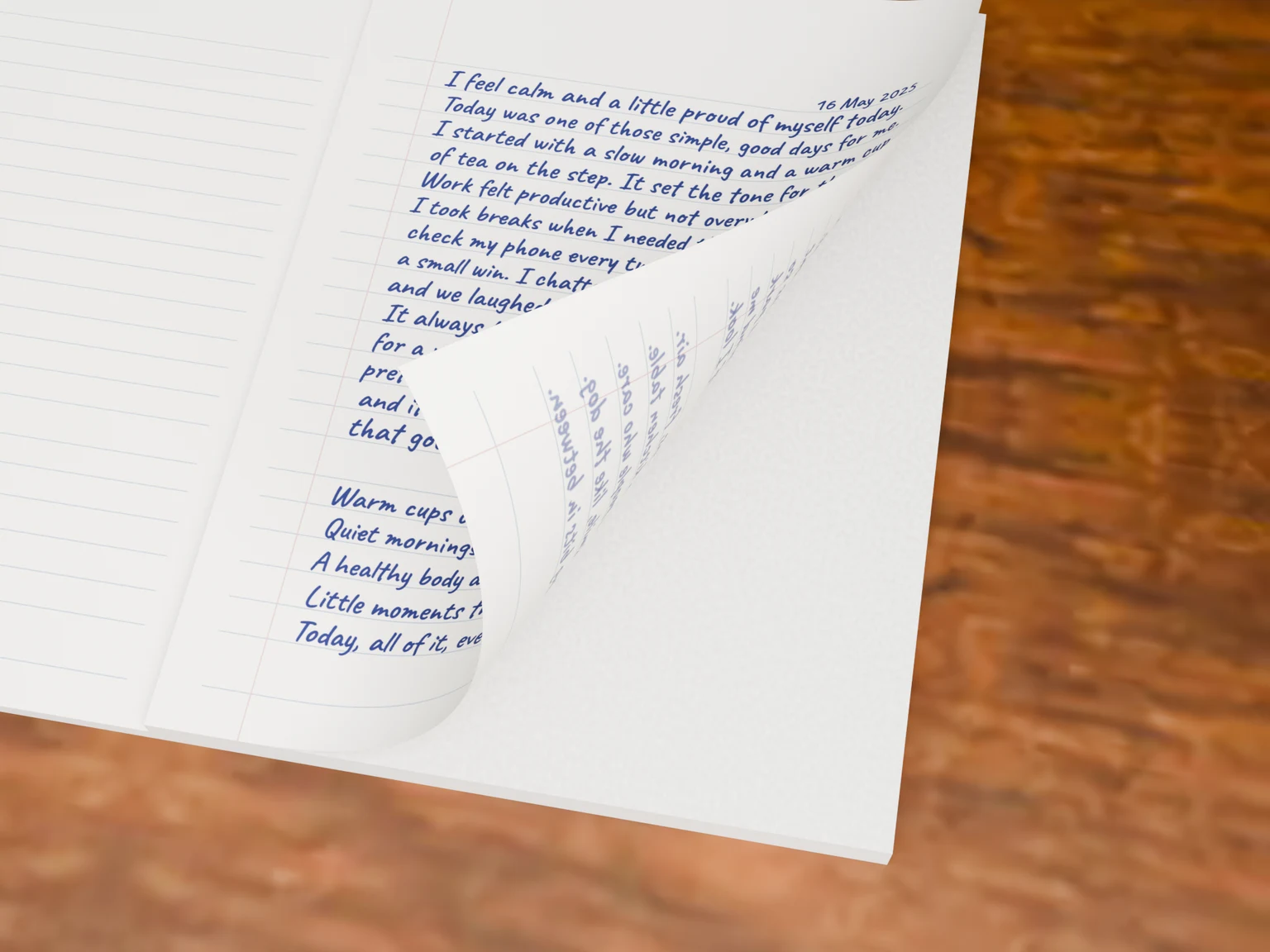
Pictures are for illustration. Page order and small details in the printed journal can differ from what is shown.
Every time I open my journal, I smile
Kari, on one evening's collage in her own journal.

-
Me, making a page
This is me, doing one of my favourite things: making a collage in my own journal. I am not a therapist. I am someone who uses these skills, and this is what they look like on an ordinary evening.
-
My mind is only here
While I am doing this, my mind is only on the page. Not on the thing I am worried about, not on the list. It gives your attention somewhere to go when it is stuck. It is for the hard moments, not a fix for everything.
A DBT skill: Activities, from ACCEPTS
-
Being creative
Making something with your hands is fun, and research links creative activity with better wellbeing. Fun is the point: if it is not fun, you will not come back to it.
-
Stickers
I loved them when I was little and I still do. Colour, paper, something nice under your fingers. That is the self-soothing bit, and it is on the front of the journal for a reason.
A DBT skill: Self-soothe with the senses
-
It does not have to be pretty
This is the opposite of those bullet-journal videos where every page is perfect and you feel you would ruin it. Nothing says it has to be pretty. A crooked sticker is fine. Glue on your finger is fine.
A DBT skill: Non-judgemental stance
-
You can fix a page
There was a part I did not like how it looked, so I put more stickers on. In the end I covered the whole page, and that is okay. Next time I will keep the polaroid and decorate around it. Doing what works instead of giving up is a skill too.
A DBT skill: Willingness
-
A page that makes me smile
Now this page is Chiquita, my lovely dog. Every time I open the journal it is going to make me smile. A smile is a skill as well: you do it on purpose, even a small one, and you practise it until it is habit. Short term, it is a coping skill. It works for me.
A DBT skill: Half-smile, willing hands
New to this? Start with the guide: journaling for anxiety, how to start and what to write.
Kari's own experience, with skills named as she uses them. Educational self-help, not therapy or medical advice.