
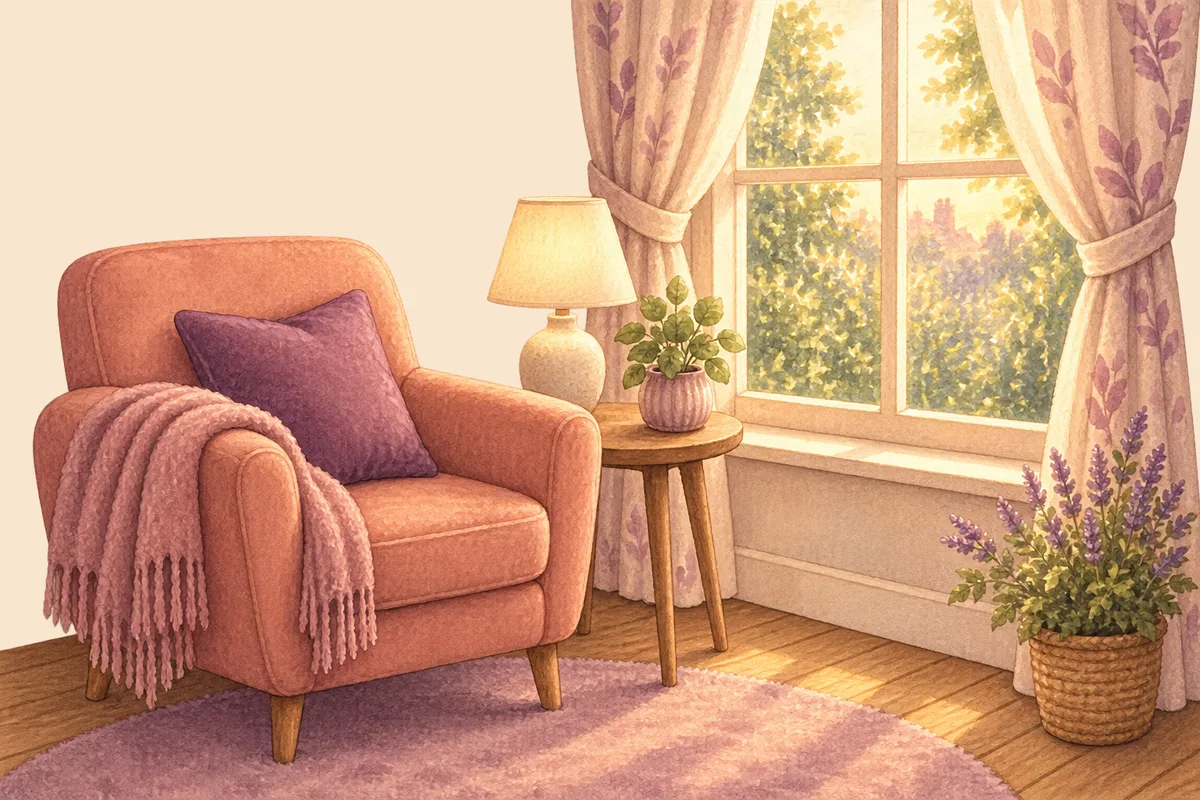
A calm corner is one small place in your home that is set up to help you feel settled. Not the whole room, not a project for “one day”. One corner your nervous system learns to rest in. When the rest of the house feels like a lot, having one spot that feels easy makes a real difference.
The best part is that you do not need to tidy everything first, and you do not need to spend money. You almost certainly have what you need already.
Why one corner is enough
Our spaces shape how we feel more than we tend to notice. A cluttered view quietly drains your attention all day. The flip side is true too: a small, clear, soft spot gives your mind somewhere to settle. You do not have to earn it by fixing the whole home. One corner is allowed to be calm while the rest catches up.
 one chair, one light, one soft thing
Building it, step by step
- Pick the smallest possible spot. A chair, a cushion, one end of the sofa.
- Clear that spot only. Nothing else needs to be done first.
- Add one soft thing. A blanket or cushion your body likes.
- Add one thing that calms you. A candle, a plant, a warm lamp, headphones.
- Decide what it is for. Ten quiet minutes, or your morning cup of tea.
Keep it easy to keep
A calm corner only works if it stays easy. Let it be the one spot you reset before bed, that small patch alone, so it is ready for you tomorrow. If it slips, that is fine. You are not failing a test. You are clearing one small space again, which is always allowed.
If making even a small start feels like too much right now, that is exactly the kind of day I work best alongside people on. You can read how I work whenever you are ready.