If you want to know how to stay decluttered, the honest answer is small systems built over weeks, not one heroic weekend. A clear-out changes the stuff; the habits around it take longer. That is not a willpower problem. This article explains why, using what little research exists.
Here at Healing Spaces, Karina Barboza (Kari) works with people across West London. We wanted to look properly at what helps a clear home stay clear.
The weekend blitz, and what happens next
It usually starts the same way. A free weekend, a burst of determination, bin bags, a trip to the tip. By Sunday night the place looks transformed.
Then, a few weeks later, the surfaces fill up again. The chair has clothes on it. The drawer will not shut.
When that happens, people reach for one explanation: they failed. Some lack of character or discipline. We do not buy that reading.
A one-weekend blitz changes what is in the home. It leaves everything else untouched: where things go, what comes in, and the small daily routines that keep a place usable. That is why the habits around it matter so much.
What the research can and cannot tell us
One well-known study looked at how habits form: a new daily habit took a median of 66 days to become close to automatic, and missing a day made little difference. Studies have looked at habits, daily stress and motivation rather than at a single clear-out on its own, so that is where we have looked.
Habits often take around two months, not a weekend
The clearest relevant finding comes from Lally and colleagues at University College London (2010). 96 volunteers took part, each building a new daily habit.
For the people whose data could be modelled, the estimated median time for the habit to become automatic was 66 days. “Automatic” in this research means doing the thing without thinking about it, like brushing your teeth. The median is the middle value: half the people got there faster, half slower. The range was wide, from 18 days to 254 days.
Two encouraging details stood out. Missing a single day did not materially affect the process. And there was no magic moment: the habit grew gradually.
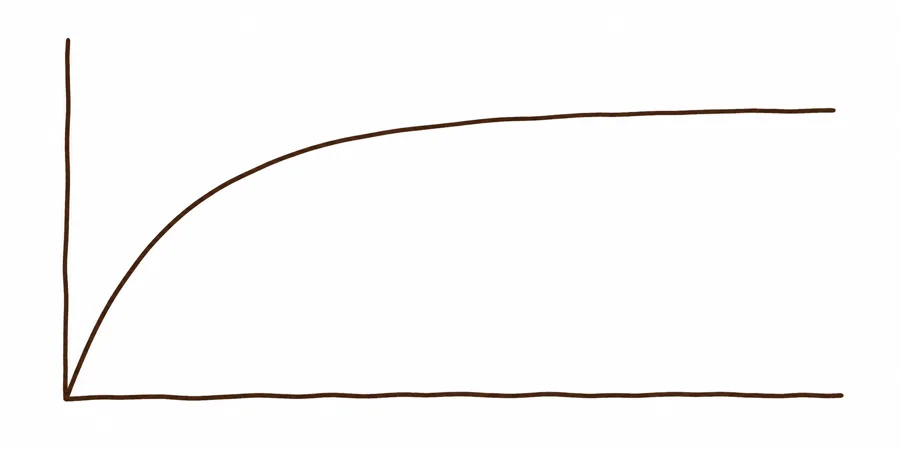
A blitz compresses the clearing into a weekend. But the habits that keep a home clear still need those weeks of repetition: putting things in their spot, dealing with post, putting clothes away.
The clearing is instant and the habits are not. That mismatch, not weak character, may be why things creep back.
There is a second piece. Kanner, Coyne, Schaefer and Lazarus (1981) followed adults for ten months. They measured two things: small everyday hassles and major life events. They found that everyday hassles predicted psychological symptoms better than major life events did. Psychological symptoms here means signs of mental strain.
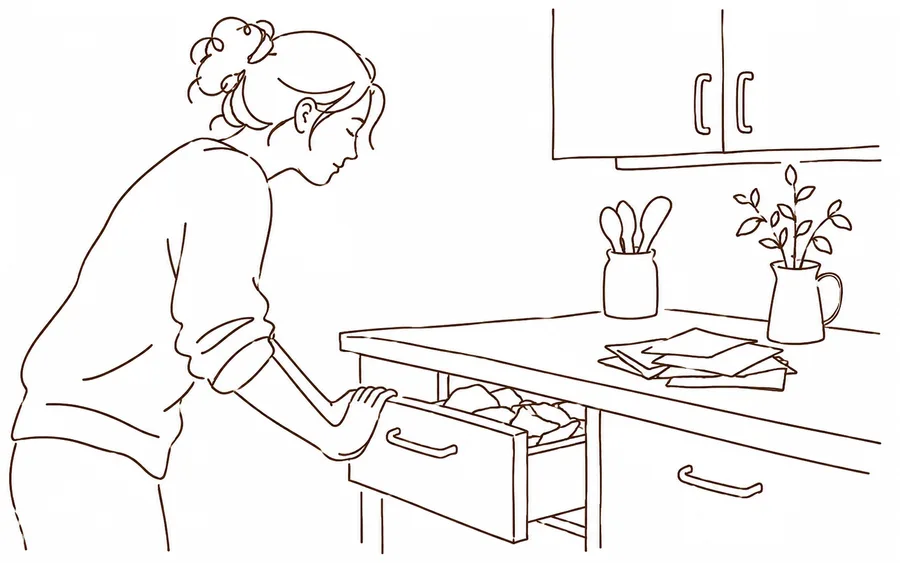
At home, daily hassles look like the keys that vanish, the drawer that jams, the pile you have to move to cook. Clearing a home may remove many of those small hassles. Kanner did not study homes, so that part is our reading.
What tends to last: how to stay decluttered
Four things that tend to help:
One spot at a time. Rather than the whole house, take a single shelf or drawer. Get it working before moving on. This matches how habits form: small, repeated, specific.
A home for the things you use every day. Habits stick best when the easy thing is also the right thing. A hook for keys by the door. Most worn clothes at the front of the rail. A landing spot for post so it doesn’t spread across the counter. When the right action is also the easy action, it tends to happen.
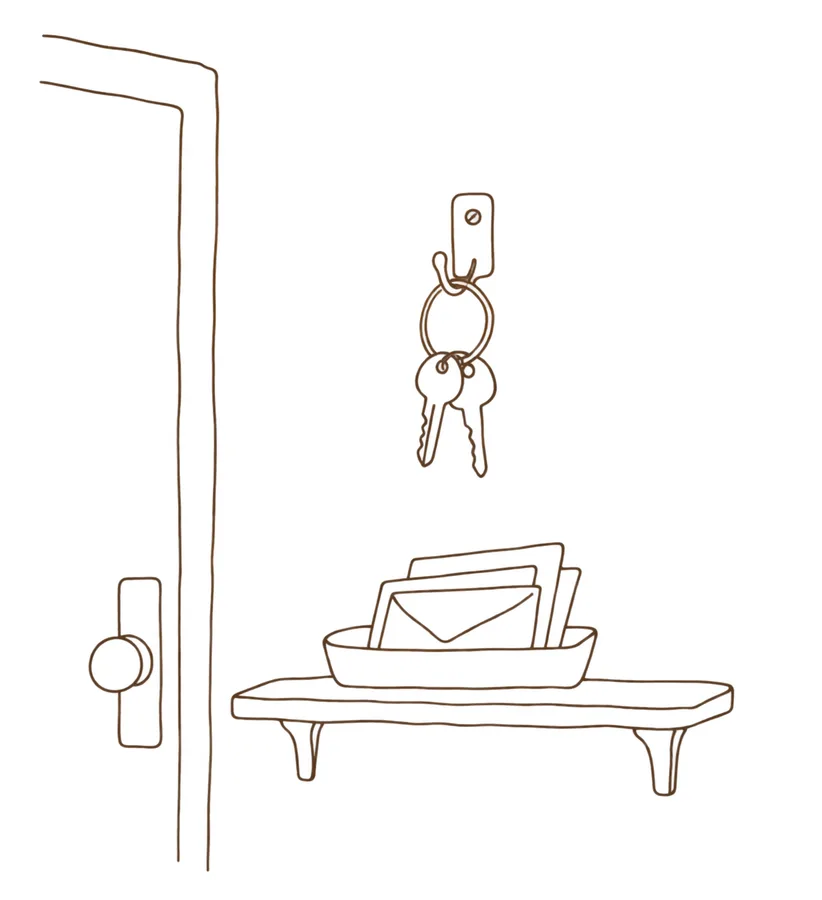
Systems that fit how you live. A system that suits somebody else’s routine will fight yours. If you take your shoes off in the hall, the shoe storage goes in the hall. Not where a magazine photo says it should.
Built around what matters to you. In our experience, change you choose for your own reasons tends to last longer than change someone else wants for you; we know of no study of this in organising.
Small wins add up
There is also a motivational side. Amabile and Kramer did diary research: people wrote down each day’s events and feelings, and the researchers looked for patterns. They found that days when people made progress on work that mattered to them were the days their mood and motivation were highest.
That research was done at work, not at home, so we offer it carefully. But the parallel is easy to see. A drawer that finally shuts. A table you can eat at. A chair you can sit on without clearing it first. Progress you can see tends to fuel the next bit of progress.
How we work
Because of all this, we do not do blitzes. We start with what matters to you: which room, which annoyance, which goal. Then we build from there.
We put systems in place a little at a time. Each one has a chance to become automatic, rather than overwhelming you with ten new habits at once. And we check in afterwards, because a system that suited your life in March may need adjusting in June. Homes and lives change, and the organising can change with them.
A first step
If your home has filled back up after a clear-out, that is a sign the first attempt asked too much of a weekend, not too little of you. You can book a free first chat if you want to talk about what a steadier version could look like.
Sources
Lally P and colleagues (2010), How are habits formed: modelling habit formation in the real world, European Journal of Social Psychology, doi:10.1002/ejsp.674.
Kanner AD, Coyne JC, Schaefer C and Lazarus RS (1981), Comparison of two modes of stress measurement: daily hassles and uplifts versus major life events, Journal of Behavioral Medicine, doi:10.1007/BF00844845.
Amabile T and Kramer S (2011), The Progress Principle, Harvard Business Review Press.