Is clutter bad for your health? The honest answer: research links a stressful-feeling home with stress and low mood. But that is a link, not proof clutter causes them. The home-and-mood study is also small. The strongest evidence is about falls in older people at higher risk. There, clearing hazards at home cut falls. Headlines about clutter are everywhere. Some claim your untidy home is ruining your sleep, your marriage and your bank balance. Some of that has research behind it. Some of it is simply made up. So we read the studies ourselves.
← Back to blog
Is clutter bad for your health? What the research really says
researchwellbeinghabits
The research so far
| What was tested | How much research | What it found |
|---|---|---|
| A home that feels stressful, and daily stress hormone patterns | Early studies | ?A link was found, in one small study; size not clear yet |
| Making the home safer, for older people at higher risk of falling | Studied | Falls cut by 38% |
| Making the home safer, for older people not chosen for fall risk | Studied | No clear difference |
Dots: how much research there is. Bars: how big a difference it made.
Small hassles add up
In 1981, four researchers ran a study: Kanner, Coyne, Schaefer and Lazarus. They followed a group of middle-aged adults for ten months, checking in each month.
They looked at two kinds of stress. One was major life events: big crises. The other was everyday hassles: small, repeated irritations. The hassles predicted psychological symptoms better than the big events did. Not the crises. The little things, over and over.
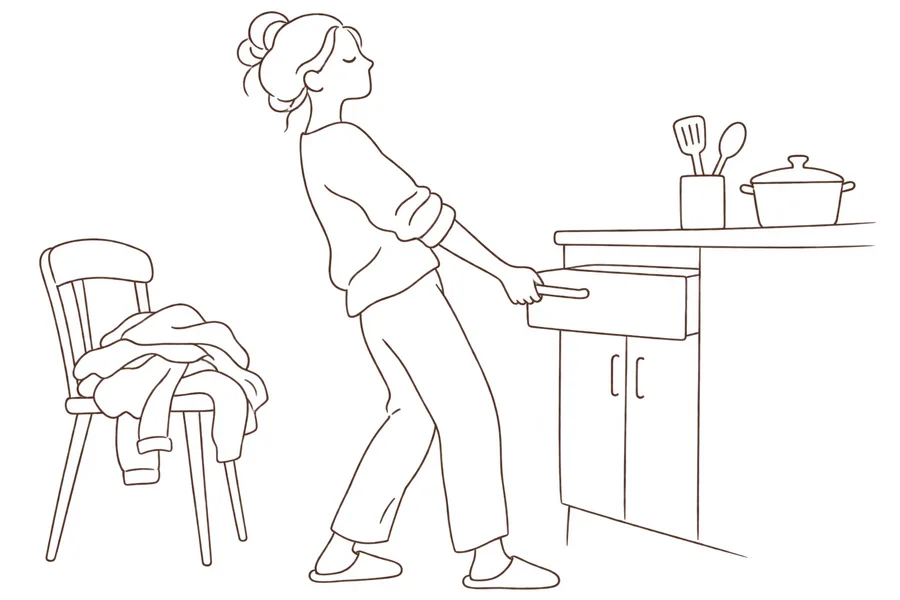
Home is where many of those little things live. The drawer that jams. The chair that collects clothes. The counter you clear before you can cook.
The arithmetic is worth doing. Something that costs you five minutes a day takes about thirty hours a year. Over forty years, that is roughly 1,200 hours. That is about seven months of working weeks. Six spots that each cost two minutes a day cost about seventy-three hours a year.
Nobody can avoid every hassle. But a home that takes small payments from you, every day, for decades, is worth thinking about.
Can clutter affect your mood?
In 2010, Saxbe and Repetti studied 60 working husbands and wives: 30 couples. Each person gave a tour of their home in their own words. Software counted the words they used, such as “cluttered”, “unfinished” or “restful”.
Women who described their homes in stressful terms (words like “cluttered” and “unfinished”) had flatter daily cortisol patterns and lower mood through the day. Cortisol is the body’s main stress hormone. A flatter pattern means it changes less across the day. That flatter pattern has been linked with poorer health.
Women who used restful words showed the opposite. The findings were for the women in the study.
It is a small study. And it shows a link, not a cause. A link means two things go together. It does not prove one causes the other. We say that honestly, because it matters. Still, a link between how stressful a home feels and how the day goes is worth taking seriously. For the full answer, read Does clutter affect your mental health?
Does clutter affect children too?
Researchers also study “household chaos”. That means homes that feel disorganised and confused.
In 2020, Marsh and colleagues published a review. A review gathers many studies on one question and looks at them together. This one was a scoping review: it maps what has been studied rather than pooling numbers. It covered 112 studies. Chaos was associated with a range of poorer outcomes for children and families.
A large UK twin study adds something interesting. A twin study compares twins who grew up in the same home. Von Stumm and colleagues (2024) followed 4,732 families. Each family had teenage twins. At age 16, one twin sometimes felt the home was more chaotic than the other twin did. Those teenagers had poorer mental health at 23. It was about how chaotic the teenager felt the home was. This held even beyond what their parents reported.
This is not about perfect homes. Children do not need a show home. What helps is routine and calm: predictable meals, a bedtime that happens, a floor you can walk across.
The strongest evidence of all: falls
Here the research is at its most solid. A 2023 Cochrane review looked at 22 studies covering 8,463 older people. Cochrane is a trusted network that pools the best available trials on a question.
For people at higher risk of falling, reducing hazards at home cut falls by 38 per cent. That meant finding and fixing fall hazards in the home, such as fitting non-slip strips on steps. For people not at particular risk, there was no clear difference.
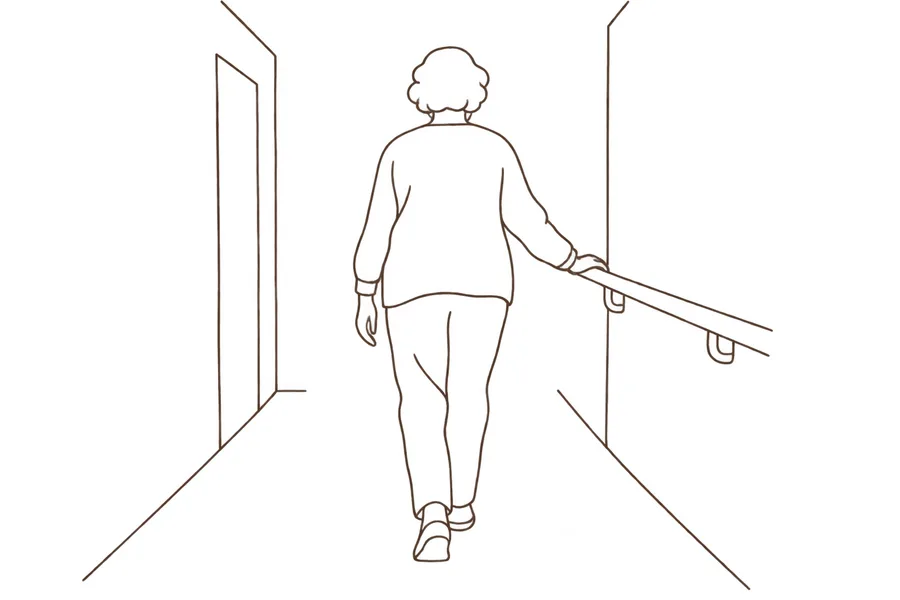
Maybe you, or someone you love, has had a fall in the past year. Or has recently been in hospital, or needs help with daily tasks. If so, this is the research that speaks directly to you. Keeping everyday routes clear is not about tidiness for its own sake.
What the research doesn’t say
Now the honest part. You may have read that 65 per cent of people lose sleep to clutter. Or that clutter causes half of relationship stress. Or that a quarter of people with cluttered homes pay bills late. We looked for research behind those figures and couldn’t find any.
“Tidy home makes you richer and live longer” is also overreach. It is easy to imagine that people who are organised by nature have tidier homes and better health. So studies of tidiness and health can’t separate tidiness from personality, money and space.
And one more thing worth saying plainly: low mood can come first. When life is hard, everyday jobs are often the first to give. That’s a sign of how hard things have been, not a failing.
Why we start small
Here is a gap we should name. We could not find a study of whether a big one-off declutter lasts. What has been studied is habits.
Lally and colleagues at University College London found in 2010 that new daily habits took a median of 66 days to become automatic. The median is the middle value: half the people took less time, half took more. Longer for some people.
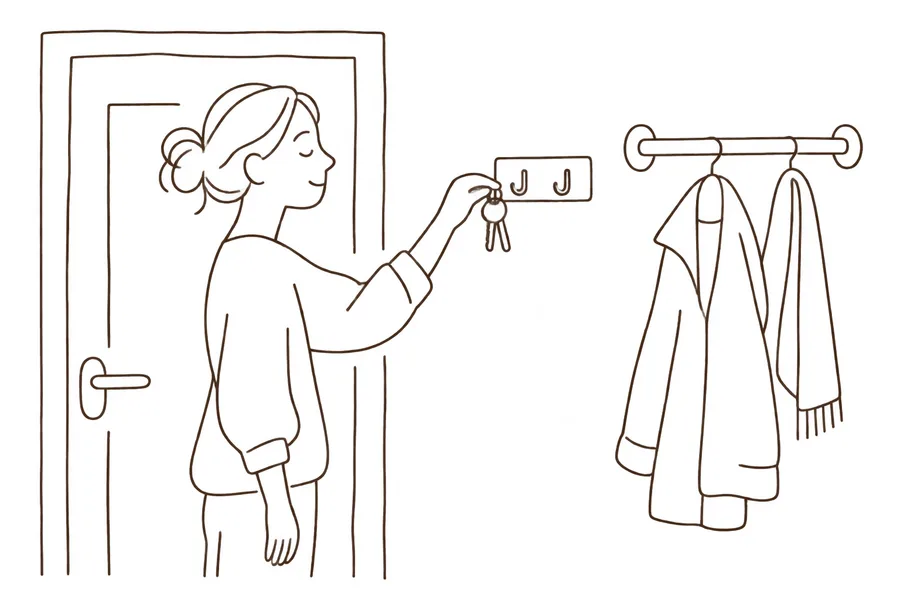
That is why we believe in small changes built around you. Surroundings do the remembering: keys by the door, most-worn clothes at the front of the rail.
In one US survey of 227 adults, people who found decisions hard said clutter affected their lives more. That fits a simple idea: small, clear decisions are easier to start with.
We think changes made for your own reasons are more likely to stick, though we know of no study of this in organising. We would rather build something that is still working for you next year than something that photographs well this month.
Where we come in
Here at Healing Spaces, Karina Barboza (Kari) does not do makeovers for the photos. She starts with what matters to you: calmer mornings, room for a hobby, space for family to stay. Then she builds systems a little at a time.
If any of this rings true, book a free first chat.
Sources
- Kanner, Coyne, Schaefer & Lazarus (1981), hassle scores and psychological symptoms. 10.1007/BF00844845
- Marsh and colleagues (2020), household chaos and child and family outcomes: a scoping review. 10.1186/s12889-020-08587-8
- Saxbe & Repetti (2010), home descriptions and daily cortisol. 10.1177/0146167209352864
- Patel, Graupmann & Ferrari (2023), hesitation, procrastination and clutter. 10.3390/ijerph20032061
- von Stumm and colleagues (2024), household chaos and mental health in twins. 10.1177/09567976241242105
- Clemson L and colleagues (2023). Environmental interventions for preventing falls in older people living in the community. Cochrane Database of Systematic Reviews. 10.1002/14651858.CD013258.pub2
- Lally and colleagues (2010), how are habits formed? 10.1002/ejsp.674
Related
Want to talk?
If anything here resonated, I'd love to hear from you. The first consultation is free.